

Introduction
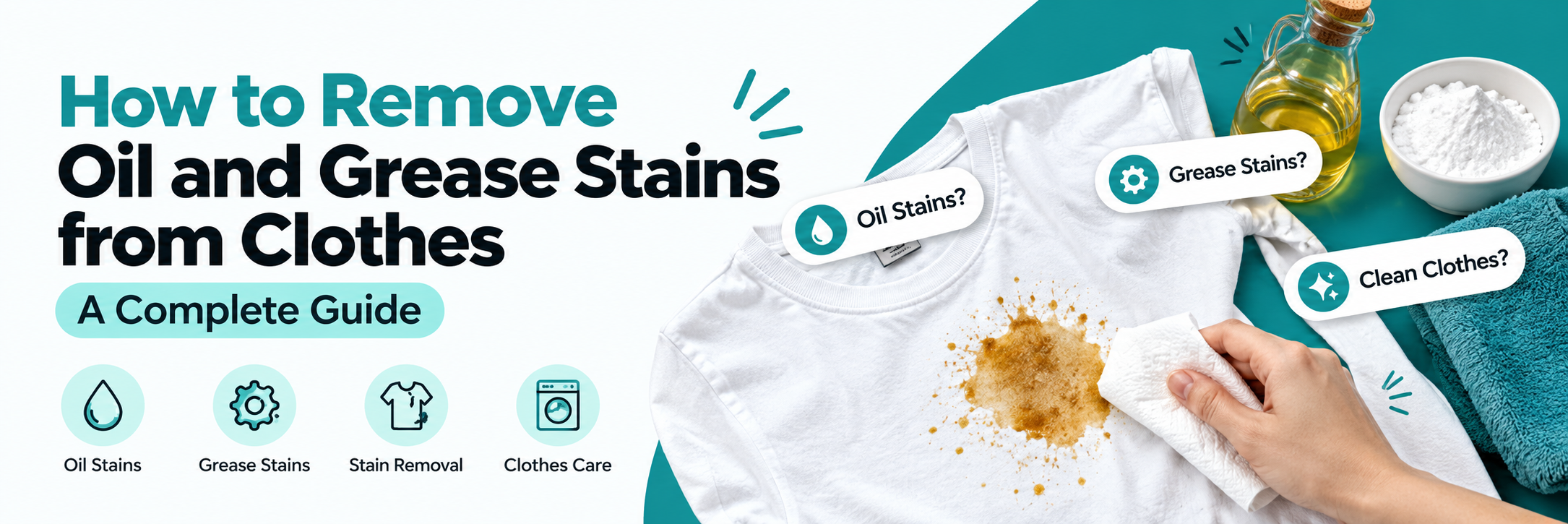
Oil and grease stains are among the most common and stubborn stains found on clothes. A small drop of cooking oil, greasy food, butter, gravy, or other oily substances can leave a noticeable mark on your favourite clothes. The good news is that fresh oil stains can often be treated effectively when you use the right method and act quickly. However, old or heat-set stains may require more careful treatment. In this guide, we will explain how to remove oil and grease stains from clothes, what mistakes to avoid, and when professional laundry care may be a better option.Why Are Oil and Grease Stains Difficult to Remove?
Oil does not mix easily with water. When it comes into contact with fabric, it can spread through the fibres and leave a dark or greasy-looking patch. A regular wash may not always remove all the oily residue. This is why pre-treating the affected area before washing can make a big difference. Common sources of oil and grease stains include:- Cooking oil
- Butter and ghee
- Fried food
- Curry and gravy
- Food sauces
- Cosmetics and creams
- Motor oil and mechanical grease
How to Remove Fresh Oil Stains from Clothes
1. Blot the Excess Oil
As soon as you notice an oil stain, gently blot the area with a clean paper towel or cloth. Avoid rubbing the stain aggressively because this can spread the oil further into the fabric.2. Absorb Excess Grease
For a fresh and heavy oil stain, an absorbent powder can help draw out some of the excess oil. Apply a small amount over the stained area and leave it for several minutes. Gently remove the powder afterward. Always consider the fabric type before using any stain-treatment method.3. Apply Liquid Laundry Detergent
Apply a small amount of suitable liquid laundry detergent directly to the stained area. Gently work the detergent into the stain and allow it to sit according to the product instructions.4. Wash According to the Care Label
Wash the garment according to the temperature and cycle recommended on its care label. Do not automatically use hot water, as some fabrics can shrink, fade, or become damaged at high temperatures.5. Check the Stain Before Drying
Always inspect the garment after washing. If the oil stain is still visible, treat it again before putting the garment into a dryer or exposing it to high heat.How to Remove Old Oil Stains from Clothes
Old oil stains can be more difficult to remove, especially if the garment has already been washed or dried several times. Start by checking the garment's care label and identifying the fabric. For washable clothes:- Apply an appropriate stain-treatment product to the affected area.
- Allow it to work according to the product instructions.
- Wash the garment using the recommended washing cycle.
- Check the stain before drying.
- Repeat the treatment if necessary.
How to Remove Cooking Oil Stains from Clothes
Cooking oil is one of the most common causes of household oil stains. Whether oil spills while cooking or splashes onto your clothes while eating, the important thing is to treat the stain as soon as possible. First, remove excess oil by gently blotting the area. Then apply a suitable detergent or stain-treatment product before washing. Avoid relying on water alone because oil does not dissolve easily in water.How to Remove Greasy Food Stains
Indian food, fried food, curry, and gravies can create difficult stains because they may contain both oil and coloured ingredients. Remove any solid food particles carefully without spreading the stain. Next, blot excess oil and pre-treat the affected area with a suitable laundry product. Do not rub delicate fabrics aggressively, as this can damage the fibres or spread the stain.How to Remove Oil Stains from White Clothes
Oil stains can be particularly noticeable on white shirts, T-shirts, uniforms, and other light-coloured garments. Pre-treat the stain before washing and follow the garment's care instructions. After washing, check the garment carefully before applying heat. If the stain is still visible, repeat the appropriate treatment instead of immediately drying the garment.Common Mistakes to Avoid When Removing Oil Stains
Rubbing the Stain Too Hard
Aggressive rubbing can spread the oil and may damage the fabric fibres.Washing Without Pre-Treatment
Heavy oil stains may not disappear completely during a normal washing cycle. Pre-treatment can help loosen the oily residue.Applying Heat Too Early
Do not dry an oil-stained garment until you are sure the stain has been removed. Heat can make some stains more difficult to treat.Ignoring the Care Label
Different fabrics require different cleaning methods. Always check the care label before using a stain remover or changing the washing temperature.Using Too Many Home Remedies
Not every DIY stain-removal method is suitable for every fabric. Delicate fabrics such as silk, wool, or specially finished garments may require professional care.When Should You Choose Professional Laundry Care?
Professional laundry care can be a better option when:- The garment is expensive or delicate.
- The stain is old or heavily set.
- The garment has already been washed and dried multiple times.
- The care label recommends professional cleaning.
- The fabric has special finishes or decorations.
- You are unsure which stain-treatment method is safe.
How to Prevent Oil and Grease Stains
While accidental spills cannot always be avoided, a few simple habits can help protect your clothes.- Treat oil stains as soon as possible.
- Avoid rubbing fresh stains aggressively.
- Check clothes for stains before washing.
- Do not apply high heat while a stain is still visible.
- Follow the garment's care label.
- Keep heavily stained garments separate when appropriate.
How LaunderGo Can Help
Some everyday stains can be treated at home, but stubborn stains and delicate garments may require professional laundry care. LaunderGo helps customers access laundry and cleaning services for their clothing-care needs. Depending on your location and selected service, professional laundry care can be a convenient option when you do not want to risk damaging a valuable or delicate garment.Final Thoughts
Oil and grease stains do not always mean that a garment is ruined. The key is to act quickly, remove excess oil, use an appropriate pre-treatment, follow the garment's care instructions, and check the stain before applying heat. For old, stubborn, expensive, or delicate garments, professional laundry care can be a safer choice than experimenting with multiple home remedies. With the right care, you can keep your clothes cleaner and extend their usable life.Frequently Asked Questions
How do you remove oil stains from clothes?
Blot the excess oil, apply a suitable laundry detergent or stain-treatment product, and wash the garment according to its care label. Always check the stain before drying.Can old oil stains be removed from clothes?
Old oil stains can sometimes be removed, but they are generally more difficult than fresh stains. Professional treatment may be useful for heavily set stains.Can I put an oil-stained shirt directly into the washing machine?
For a fresh or heavy oil stain, it is generally better to pre-treat the affected area before washing.Should I use hot water for oil stains?
Not necessarily. The correct water temperature depends on the fabric and its care label. Avoid automatically using hot water on every garment.Why is my oil stain still visible after washing?
Oil can remain within fabric fibres even after a normal wash. The garment may require additional pre-treatment before another wash.Can professional laundry services remove oil stains?
Professional laundry services can assess the fabric and stain and select an appropriate cleaning method, particularly for delicate or valuable garments.How can I prevent oil stains from becoming difficult to remove?
Treat the stain as soon as possible, avoid aggressive rubbing, follow the care label, and avoid applying heat until you confirm that the stain has been removed.Does LaunderGo provide laundry and cleaning services?
LaunderGo helps customers access laundry and cleaning services, with available services depending on the customer's location and selected service.Frequently Asked Questions
Related articles
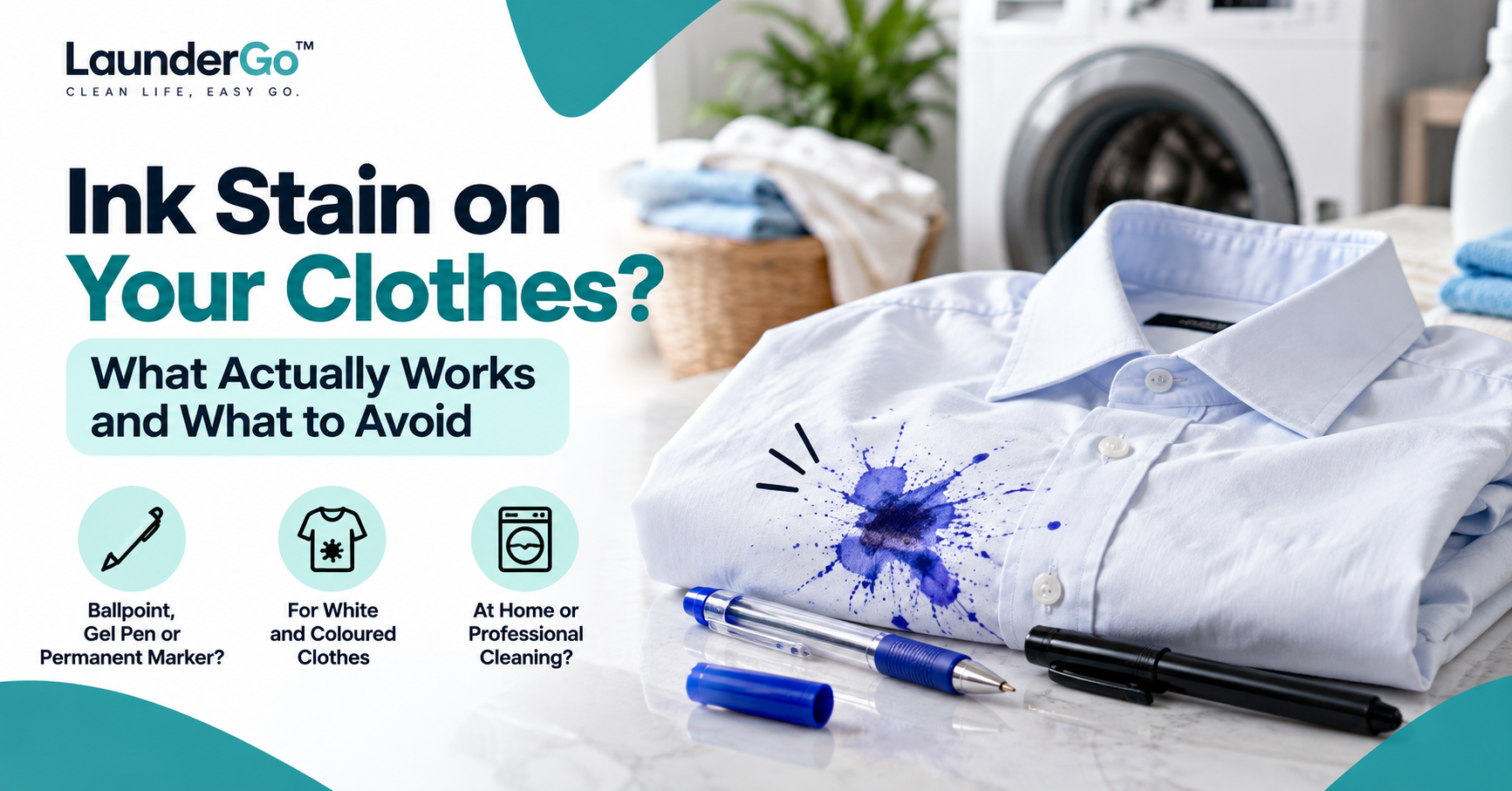
How to Remove Ink Stains from Clothes: What Works and What to Avoid
Ink stains can ruin a perfectly good shirt, trouser or school uniform in seconds. Learn how to remove ink stains from clothes, what works for different types of ink, which home remedies to avoid and when professional stain removal is safer.
Oct 5, 2026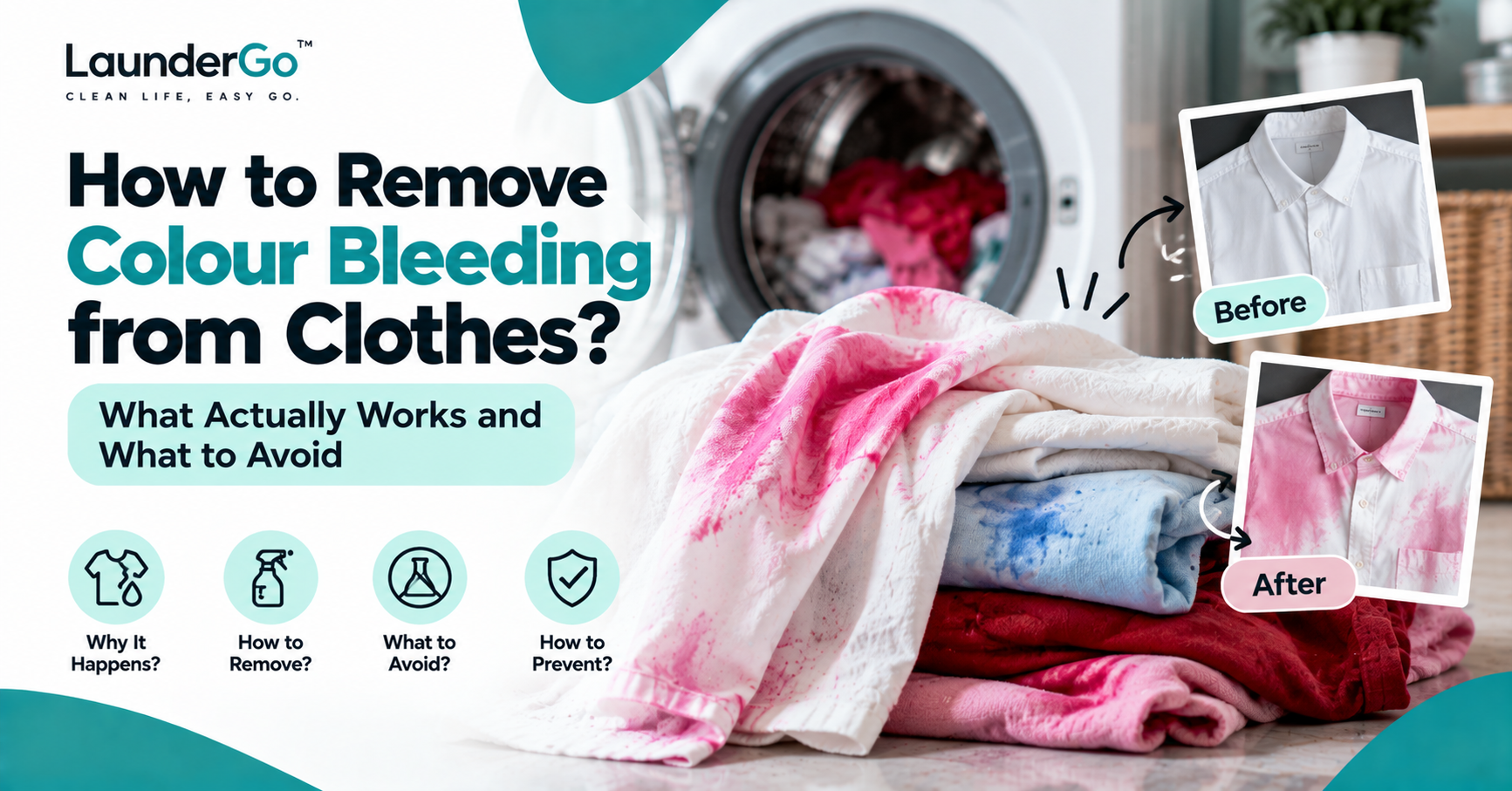
How to Remove Colour Bleeding from Clothes: What Actually Works and What to Avoid
Did a red, black or blue garment stain your clothes in the wash? Learn how to remove colour bleeding, what to do immediately, which home remedies to avoid and when professional laundry care is safer.
Oct 4, 2026
Can You Put Everything in the Washing Machine? 12 Things You Should Never Wash in It
Think you can wash everything in your washing machine? Think again. Here are 12 clothes and household items that can shrink, tear, lose their shape or even damage your washing machine when washed incorrectly.
Sep 30, 2026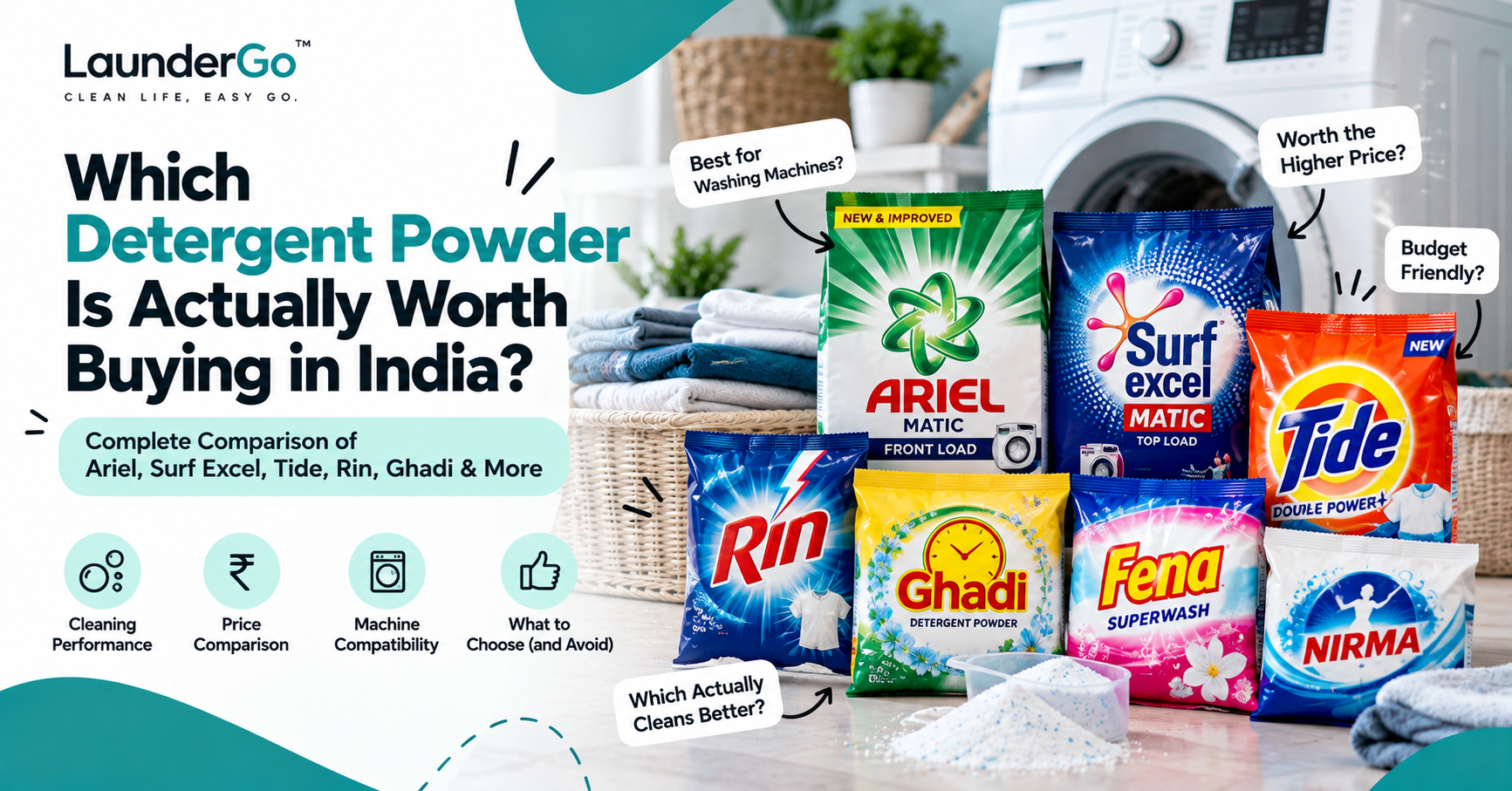
Which Detergent Powder Is Actually Worth Buying in India? Complete Comparison of Ariel, Surf Excel, Tide, Rin, Ghadi & More
Confused between Ariel, Surf Excel, Tide, Rin, Ghadi, Fena and Nirma? Here is a practical comparison of detergent powders in India, including cleaning performance, price, machine compatibility, value for money and what to avoid.
Sep 29, 2026