

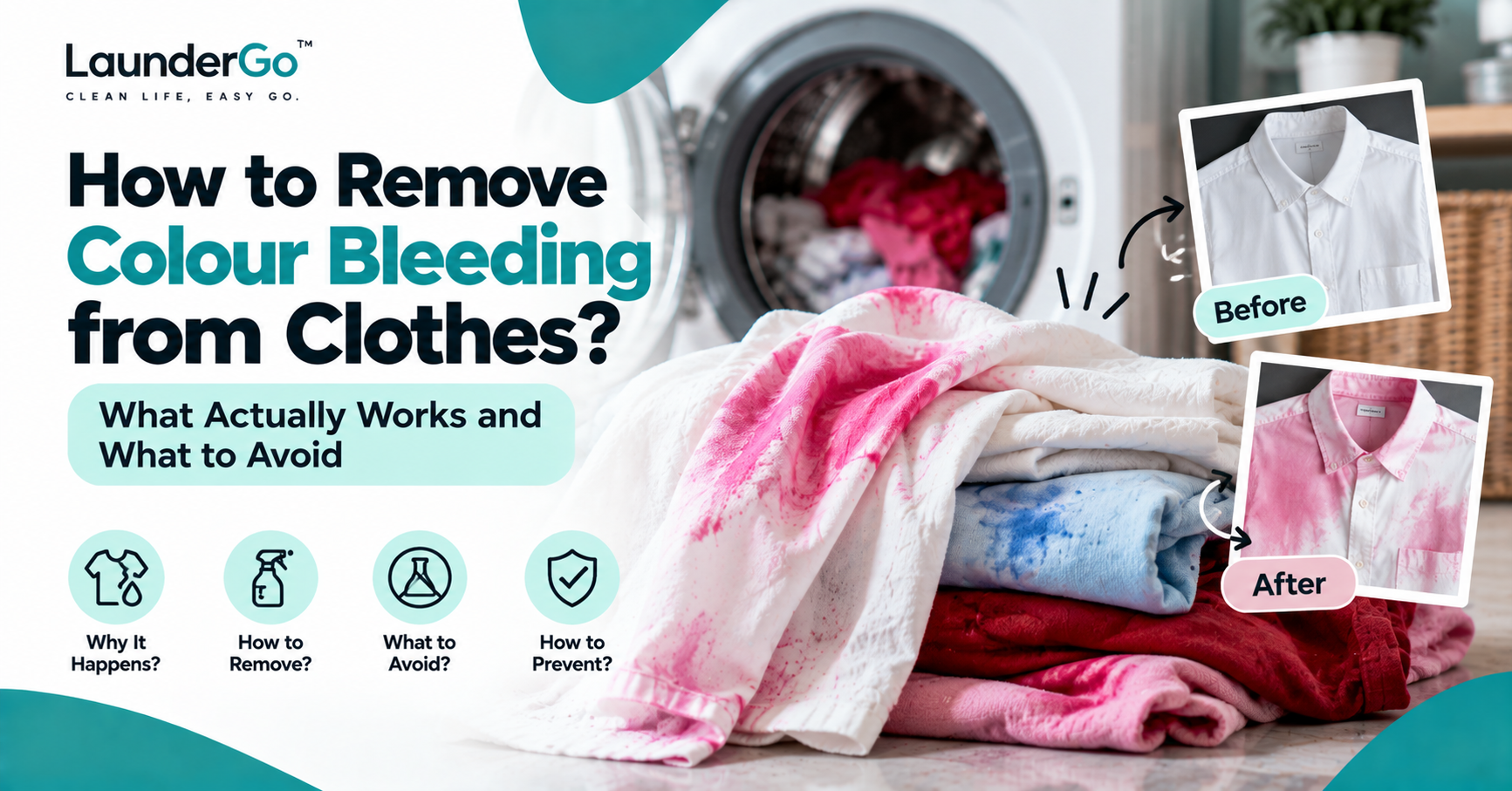
How to Remove Colour Bleeding from Clothes: What Actually Works and What to Avoid
Did a red, black or blue garment accidentally transfer colour onto your favourite clothes during washing? Colour bleeding is one of the most frustrating laundry problems, especially when a light-coloured garment gets stained by a darker one.
The good news is that fresh colour transfer can sometimes be reduced or removed if you treat the clothes quickly and use the right method. The wrong treatment, however, can make the stain harder to remove.
In this guide, we explain how to remove colour bleeding from clothes, what actually works, which home remedies you should be careful with and when professional laundry care is the safer option.
Quick Answer: How Do You Remove Colour Bleeding from Clothes?
If one garment has transferred colour onto another, follow these steps:
- Separate the affected clothes immediately.
- Do not dry or iron them yet.
- Check the care label of the affected garment.
- Rinse or rewash the garment separately using a suitable detergent.
- For stubborn dye transfer, use a colour-removal product that is suitable for the fabric.
- Repeat the treatment if necessary.
- Only dry the garment once the unwanted colour has been removed as much as possible.
The most important rule is simple: do not apply heat until you have dealt with the colour transfer. Heat from a dryer or iron can make some stains more difficult to remove.
What Causes Colour Bleeding?
Colour bleeding happens when dye from one garment transfers onto another garment during washing.
This is more common with dark, bright or heavily dyed fabrics. Red, navy, black, purple and dark blue clothes can be particularly problematic when washed with lighter garments.
Colour bleeding can happen because of:
- Washing dark and light clothes together
- Using very hot water with certain fabrics
- Washing a new dark-coloured garment for the first time
- Using an unsuitable washing cycle
- Excess dye remaining in a garment
- Long washing cycles that allow more dye transfer
- Improper sorting before washing
Understanding why colour bleeding happens can help you prevent it from happening again.
What Should You Do Immediately After Colour Bleeding?
The first few minutes matter. If you discover colour transfer after a wash, do not simply put the clothes in the dryer.
Instead:
- Remove the affected garment from the rest of the laundry.
- Keep it wet until you decide how to treat it.
- Do not iron it.
- Do not tumble dry it unless the unwanted colour has already been removed.
- Check the garment's care label.
- Choose a cleaning method appropriate for the fabric.
The longer transferred dye remains untreated, the more difficult it can become to remove.
How to Remove Colour Bleeding from White Clothes
White clothes can make colour transfer particularly noticeable. A white shirt may turn pink, grey, blue or purple after being washed with a darker garment.
For washable white fabrics, start with a gentle rewash using a suitable detergent. If the colour remains, a fabric-safe colour remover may be considered, provided the product is appropriate for the garment.
Step 1: Separate the White Garment
Remove the stained white garment from the rest of the laundry and do not wash it again with coloured clothes.
Step 2: Rewash It Promptly
Wash the garment separately according to its care label. Avoid using excessively hot water unless the garment specifically allows it.
Step 3: Consider a Colour Remover
If the transferred dye remains after washing, a colour-removal product designed for washable fabrics may help.
Always follow the product instructions and check whether it is safe for the particular fabric.
Step 4: Check the Result Before Drying
Do not dry the garment until you are satisfied with the result. Heat can make some colour stains more difficult to deal with.
How to Remove Colour Bleeding from Coloured Clothes
Removing dye transfer from coloured clothing is more complicated because aggressive stain-removal products can also affect the garment's original colour.
For coloured garments:
- Check the care label first.
- Use a detergent suitable for coloured fabrics.
- Avoid strong bleaching products unless the product specifically states that it is safe for the fabric and colour.
- Test any new cleaning product on a hidden area first when possible.
- Do not use excessive heat while trying to remove the transferred dye.
If the garment is expensive, delicate or heavily dyed, professional cleaning may be safer than experimenting with multiple home remedies.
What About Colour Bleeding on Sarees and Kurtas?
Indian ethnic wear can require extra care because sarees, kurtas, dupattas and other traditional garments may contain delicate dyes, embroidery, zari, embellishments or mixed fabrics.
A colour-bleeding problem on a cotton kurta may require a completely different treatment from one on a silk saree.
Before treating ethnic wear at home, check:
- Fabric composition
- Care instructions
- Whether the garment is colourfast
- Whether it contains embroidery or embellishments
- Whether it is labelled dry clean only
For valuable sarees, silk garments, embellished outfits and delicate ethnic wear, professional laundry or dry-cleaning services can reduce the risk of accidental damage.
Can You Remove Colour Bleeding with Vinegar?
Vinegar is often recommended online as a home remedy for colour bleeding. However, it should not be treated as a guaranteed colour-removal solution.
Vinegar may be useful in some laundry situations, but it is not designed to reverse every type of dye transfer.
If you decide to use any household product, make sure it is compatible with the fabric and avoid assuming that a natural ingredient is automatically safe for every garment.
Does Salt Stop Clothes from Bleeding Colour?
Salt is another popular laundry tip often suggested for preventing colour bleeding.
However, soaking a garment in salt water is not a reliable solution for removing dye that has already transferred onto another garment.
The better approach is to sort laundry properly, follow garment care labels and wash new or dark-coloured garments carefully.
Can Baking Soda Remove Colour Bleeding?
Baking soda can be useful for certain laundry and odour problems, but it should not be considered a guaranteed treatment for colour transfer.
Colour bleeding involves dye molecules transferring between fabrics, so the solution depends on the type of dye, fabric and extent of the transfer.
For stubborn colour transfer, a product specifically designed for colour removal may be more appropriate than repeatedly experimenting with household ingredients.
What Should You NOT Do After Colour Bleeding?
Some common laundry habits can make colour transfer worse.
- Do not immediately put the affected garment in the dryer.
- Do not iron the garment while the colour transfer is still visible.
- Do not use chlorine bleach on coloured fabrics unless the care instructions specifically allow it.
- Do not aggressively scrub delicate fabrics.
- Do not mix several cleaning chemicals together.
- Do not repeatedly use strong products without checking fabric compatibility.
- Do not assume that every internet home remedy is safe for every fabric.
When in doubt, check the care label before trying another treatment.
How to Prevent Colour Bleeding in the First Place
Prevention is much easier than trying to repair a garment after dye transfer.
Follow these simple laundry habits:
- Separate whites, lights and dark colours.
- Wash new dark or brightly coloured clothes separately for the first few washes.
- Turn coloured garments inside out when appropriate.
- Follow the recommended washing temperature on the care label.
- Avoid overloading your washing machine.
- Use a suitable detergent for your washing machine and fabric.
- Consider a colour-catcher sheet when washing mixed colours.
Good laundry sorting can prevent many colour-transfer problems before they happen.
Which Clothes Are Most Likely to Bleed Colour?
Some garments are more likely to release excess dye, particularly when they are new.
Pay extra attention to:
- Dark denim
- Black clothing
- Red garments
- Dark blue clothing
- Purple and maroon fabrics
- Brightly coloured cotton garments
- Heavily dyed ethnic wear
- New towels and bedsheets with strong colours
When you are unsure whether a garment may bleed, washing it separately is usually the safer choice.
How Do You Know Which Garments to Wash Together?
A simple sorting system can make laundry much easier.
White Clothes
Wash white garments separately whenever possible, particularly when they are new or when you are dealing with heavily dyed clothing.
Light Colours
Pastel and light-coloured garments should generally be kept away from dark and strongly coloured fabrics.
Dark Colours
Black, navy, dark blue and other dark garments can usually be grouped together, provided their care requirements are compatible.
Bright Colours
Red, orange, purple and other strongly coloured garments should be treated with caution, especially when they are new.
Sorting laundry by colour and fabric type is one of the easiest ways to reduce accidental colour transfer.
Can a Colour-Catcher Prevent Colour Bleeding?
Colour-catcher sheets are designed to trap loose dye released during washing.
They can provide an additional layer of protection when washing mixed colours, but they should not replace proper laundry sorting.
If you are washing a brand-new dark garment with white clothing, separating the garments is still the safer option.
When Should You Take Colour-Bleeding Clothes to a Professional?
Home treatment may be reasonable for simple, washable garments. Professional laundry care can be a better option when the garment is delicate, expensive or difficult to replace.
Consider professional care if:
- The garment is made from silk or another delicate fabric.
- The garment has heavy embroidery or embellishments.
- The care label says dry clean only.
- The transferred colour is extensive.
- You have already tried multiple cleaning methods without success.
- The garment is expensive or has sentimental value.
- You are unsure which treatment is safe for the fabric.
Trying several strong cleaning products at home can sometimes cause more damage than the original colour transfer.
How LaunderGo Can Help With Difficult Laundry
Not every laundry problem is easy to solve at home. Stubborn colour transfer, delicate fabrics, ethnic wear and garments requiring special care may benefit from professional handling.
LaunderGo connects customers with local laundry professionals for convenient pickup and delivery services.
Instead of spending hours experimenting with different cleaning methods, you can book your laundry service, schedule a pickup and let a professional handle garments that require additional care.
Whether you are dealing with everyday clothing, delicate garments or larger laundry loads, LaunderGo makes professional laundry care more convenient.
Colour Bleeding and Laundry Care in Delhi NCR
Colour bleeding can be especially frustrating when you are managing regular family laundry, office clothes, school uniforms or traditional Indian outfits.
For customers in Delhi NCR, Noida and Gurgaon, doorstep laundry services can make it easier to manage difficult or time-consuming laundry without handling every cleaning problem yourself.
LaunderGo helps connect customers with trusted local laundry professionals, making pickup, cleaning and delivery more convenient.
Book a laundry service with LaunderGo when you need convenient professional laundry care.
Final Thoughts
Colour bleeding does not always mean that a garment is ruined. The most important thing is to act quickly and avoid making the problem worse.
Separate the affected clothes, avoid heat, check the care label and choose a treatment suitable for the fabric. Be especially careful with silk, sarees, embroidered garments and other delicate clothing.
And remember, prevention is easier than stain removal. Sorting laundry properly before every wash can save your clothes from accidental colour transfer.
If a garment is valuable, delicate or particularly difficult to treat, professional laundry care can be a safer choice than experimenting with multiple home remedies.
Frequently Asked Questions
Related articles

Can You Put Everything in the Washing Machine? 12 Things You Should Never Wash in It
Think you can wash everything in your washing machine? Think again. Here are 12 clothes and household items that can shrink, tear, lose their shape or even damage your washing machine when washed incorrectly.
Sep 30, 2026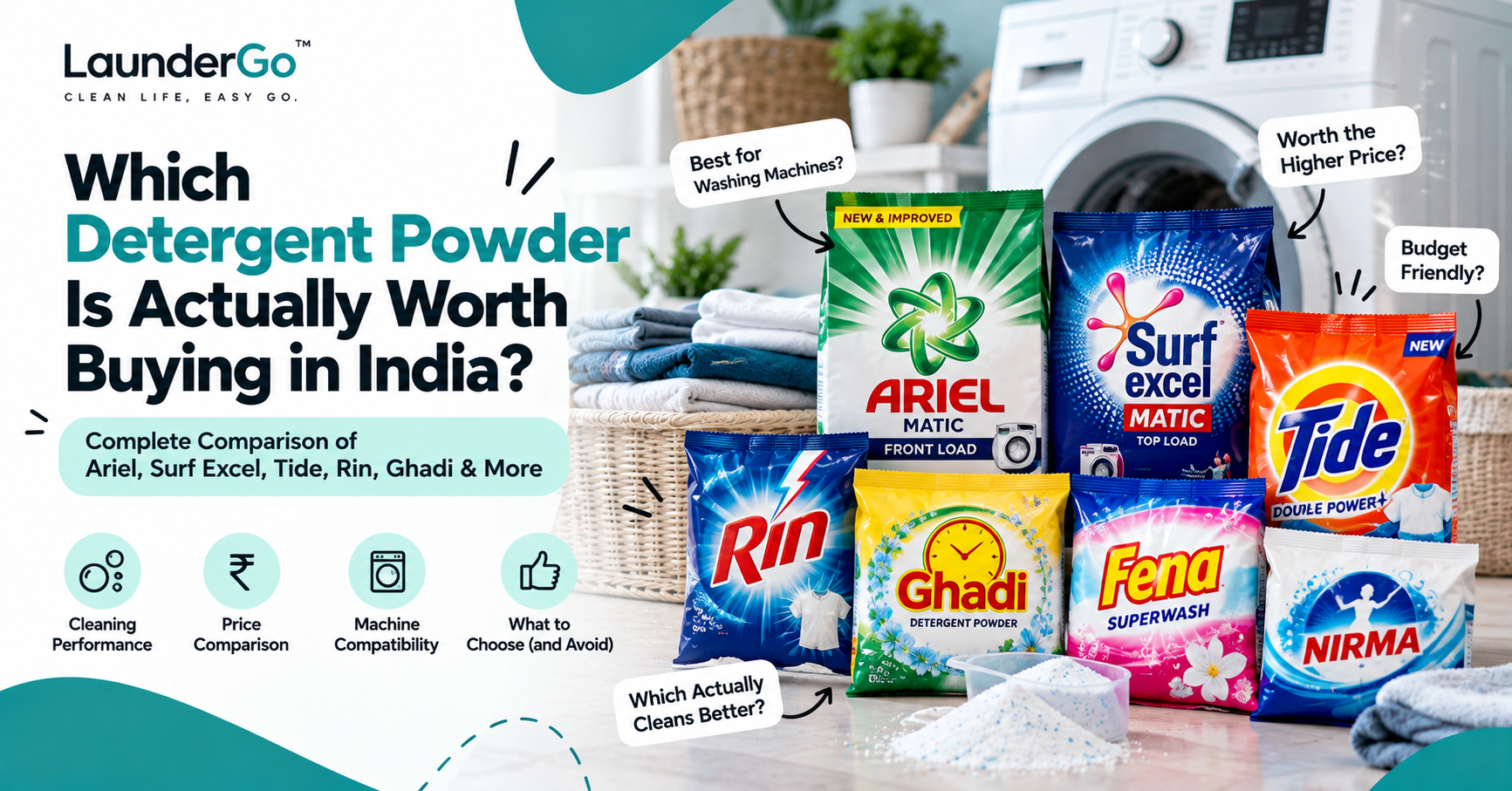
Which Detergent Powder Is Actually Worth Buying in India? Complete Comparison of Ariel, Surf Excel, Tide, Rin, Ghadi & More
Confused between Ariel, Surf Excel, Tide, Rin, Ghadi, Fena and Nirma? Here is a practical comparison of detergent powders in India, including cleaning performance, price, machine compatibility, value for money and what to avoid.
Sep 29, 2026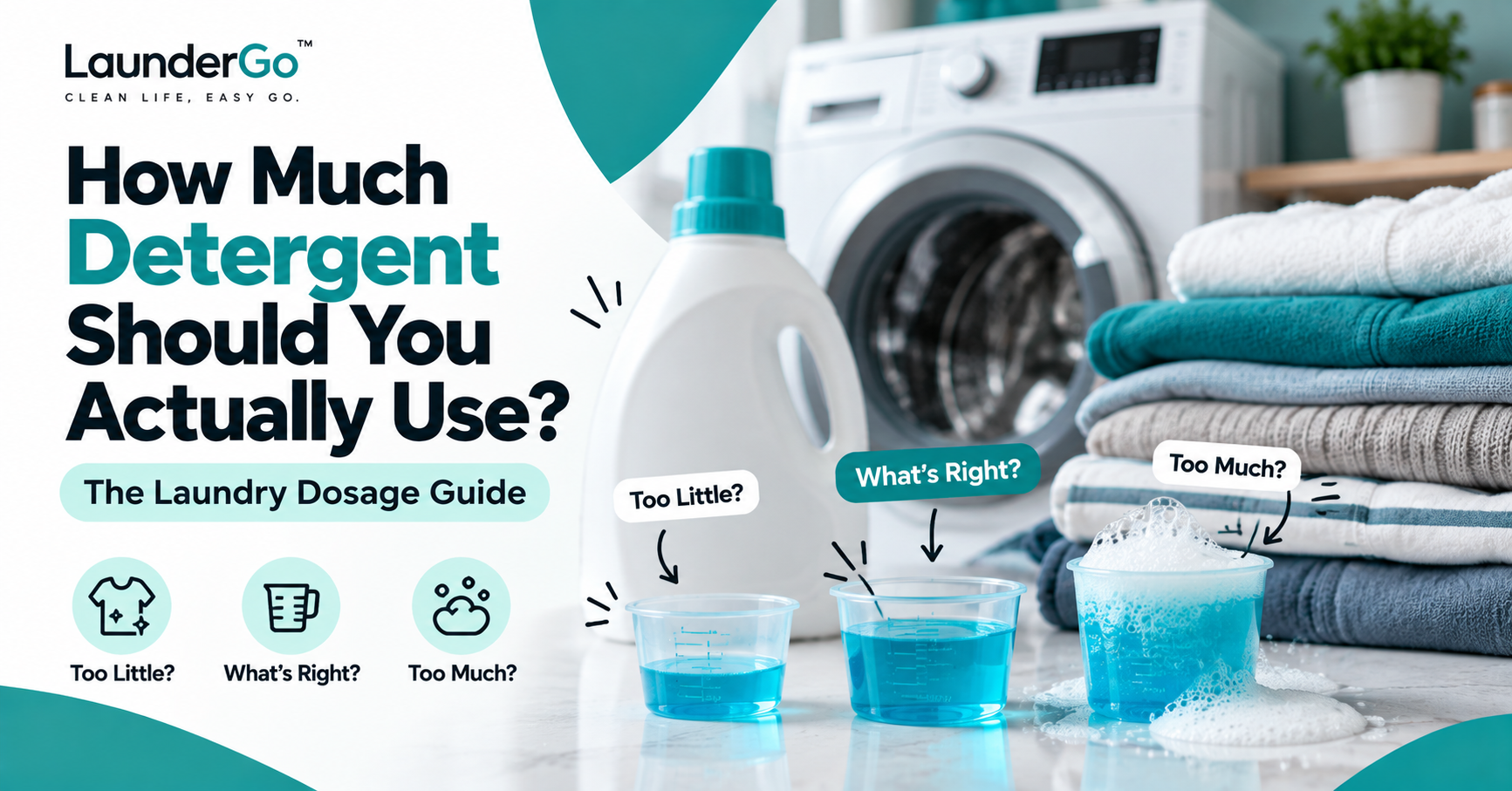
How Much Detergent Should You Actually Use in a Washing Machine?
Using too much detergent does not necessarily make clothes cleaner. Learn how much detergent to use based on load size, washing machine type, water hardness and how dirty your clothes are.
Sep 27, 2026
Is Your Washing Machine Ruining Your Clothes? 10 Mistakes You Might Be Making
Is your washing machine damaging your clothes? Learn about 10 common laundry mistakes that can cause fading, shrinking, stretching, holes and fabric damage, and how to protect your clothes while washing.
Sep 25, 2026