

Introduction
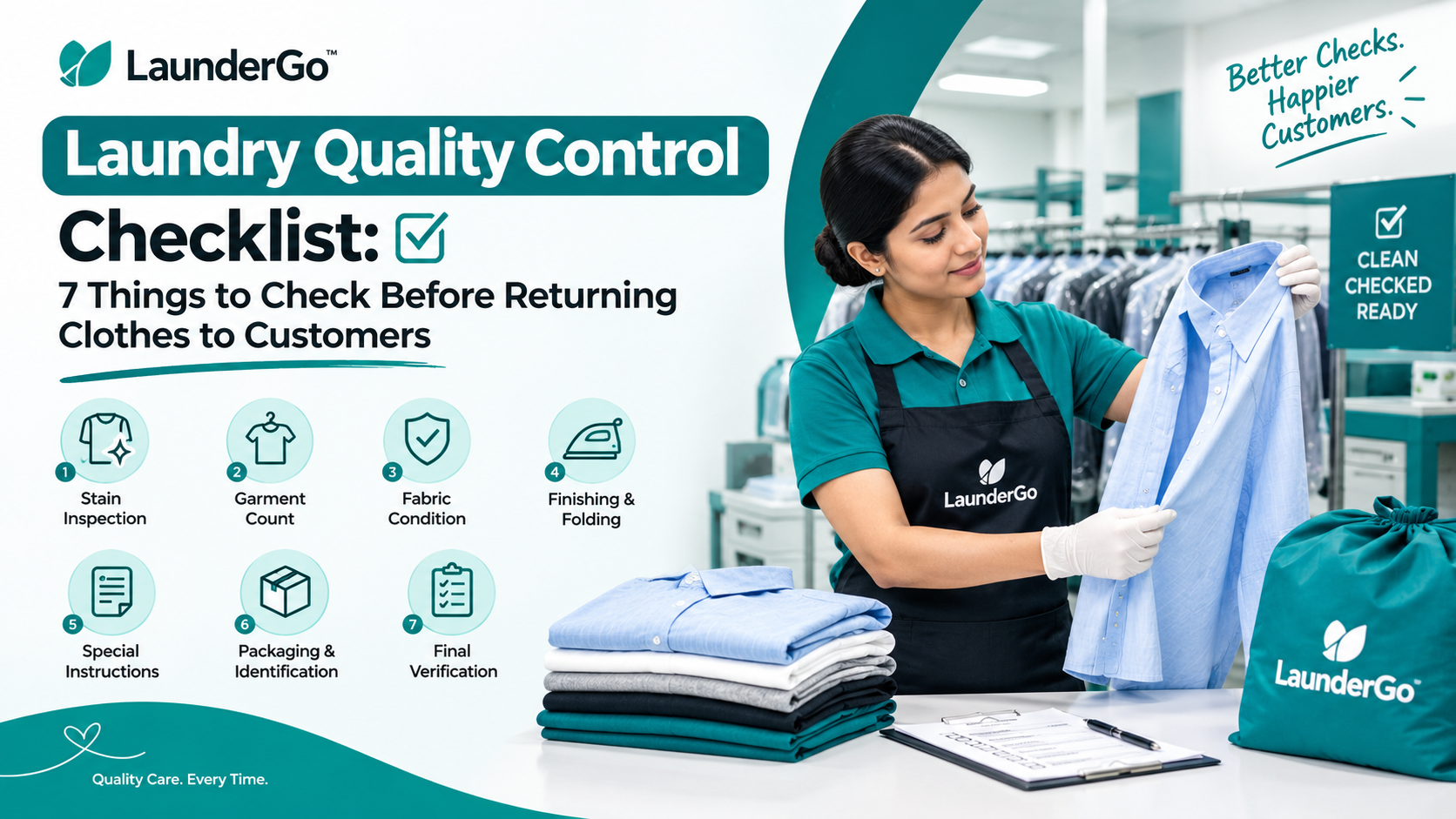
Cleaning clothes is only one part of running a reliable laundry business. Before an order is returned to a customer, the garments should also be checked for cleanliness, finishing, correct quantity and proper packaging. A shirt may look clean but still have a visible stain. A pair of trousers may be perfectly washed but poorly pressed. In another order, a garment could accidentally be packed with someone else's clothes. These small mistakes can lead to customer complaints, repeat work and unnecessary operating costs. A simple quality control process helps laundry teams identify such issues before an order leaves the shop. In this guide, we explain seven practical checks that laundry businesses can use before handing cleaned garments back to customers.Why Quality Control Matters in a Laundry Business
Quality control means checking that the completed laundry order meets the expected cleaning, handling and presentation standards before it is returned. A consistent checking process can help a laundry business:- Identify visible stains that may need further treatment.
- Reduce the risk of missing or mixed-up garments.
- Spot finishing issues before delivery.
- Check that customer instructions have been followed.
- Reduce avoidable rework and complaints.
- Build a more consistent customer experience.
7 Quality Control Checks Before Returning Clothes to Customers
1. Check the Garments for Visible Stains
After cleaning, inspect garments under suitable lighting. Pay attention to areas where stains are commonly noticed, such as collars, cuffs, underarms, trouser hems and the front of shirts. Check whether any previously identified stain is still visible. Some stains may require additional treatment, while others may be permanent or unsuitable for further treatment without risking fabric damage. If a stain remains, do not automatically apply stronger chemicals or repeat the same process. Follow the garment's care requirements and the laundry business's treatment procedure. Where appropriate, record the issue and inform the customer rather than promising complete stain removal.2. Verify the Garment Count
Confirm that the number of garments being returned matches the order record. For example, if an order contains five shirts, two trousers and one jacket, the team should verify that all eight items are accounted for before packaging. A practical process includes:- Checking the original order or item list.
- Counting each garment as it is inspected.
- Confirming that items requiring separate treatment are accounted for.
- Recording any discrepancy before the order is released.
3. Inspect Fabric Condition and Possible Damage
Check for visible issues such as loose buttons, open seams, damaged zips, pulled threads, unusual marks or changes in garment shape. Whenever possible, compare these observations with the condition recorded when the clothes were received. It is important to distinguish between pre-existing damage, normal wear and a problem that may have occurred during processing. Do not assume that every defect was caused by cleaning. If a new concern is identified, pause the order release and follow the business's procedure for documenting and reviewing the issue.4. Check Ironing, Folding and Overall Finish
A garment may be clean but still look unfinished if it has excessive wrinkles, uneven folding or visible lint. During this check, look for:- Wrinkles that require additional pressing.
- Visible lint, loose threads or packaging debris.
- Uneven folding or poor presentation.
- Buttons, collars and cuffs that need attention.
- Garments that have not received the finishing service included in the order.
5. Confirm Special Instructions Have Been Followed
Some customers provide specific instructions when placing an order. These may include handling delicate garments separately, using a particular service, avoiding certain treatments or paying attention to a previously identified stain. Before approving the order, review the available order notes and confirm that the instructions have been followed. A simple instruction checklist can include:- Special-care garments identified correctly.
- Requested washing, ironing or other service checked.
- Stain-related notes reviewed.
- Any limitations or unresolved issues recorded.
6. Check Packaging and Order Identification
Once the garments pass inspection, package them appropriately for storage, collection or delivery. Before sealing the package, verify the customer's order identifier and confirm that all items inside belong to the same order. The team should also check that:- Garments are dry before being packed for storage or delivery.
- Packaging is clean and suitable for the items.
- Delicate or special-care items are handled appropriately.
- The order label or identification matches the order record.
- Garments are protected from avoidable dirt or moisture during handling.
7. Complete a Final Order Verification
Before releasing an order, carry out one final review. This is the last opportunity to identify a problem before the garments leave the laundry facility. The final reviewer should confirm:- The garment count matches the order record.
- Visible cleaning and finishing issues have been reviewed.
- Special instructions have been checked.
- Any unresolved concerns have been documented.
- The package is correctly identified and ready for handover.
A Simple Laundry Quality Control Checklist
Use this checklist as a starting point for your daily operations. Adapt it to your services, equipment and garment-handling procedures.- Visible stains checked after cleaning.
- Garment count matched with the order record.
- Fabric condition and visible damage reviewed.
- Ironing, folding and finishing checked.
- Customer instructions verified.
- Packaging and order identification confirmed.
- Final order approval completed before handover.
Common Quality Control Mistakes Laundry Shops Should Avoid
Rushing the Final Inspection
When several orders are ready at the same time, teams may focus on speed and skip important checks. A short, repeatable checklist can make inspections more consistent without requiring a complicated process.Checking Only for Cleanliness
Cleanliness is important, but it is not the only measure of a completed order. Quantity, finishing, garment condition, customer instructions and packaging also need attention.Failing to Record Problems
If a stain remains or a garment has a pre-existing defect, relying only on memory can lead to confusion. Record important observations using the business's order management process.Releasing an Order Before Resolving a Discrepancy
If the garment count does not match the order or the package has the wrong identification, pause the handover and investigate the discrepancy before releasing it.How a Consistent Process Can Help Laundry Businesses
A quality control checklist is most useful when it becomes part of the regular workflow rather than an occasional activity. Laundry owners can train staff to follow the same inspection steps, review recurring problems and update procedures when a particular type of mistake happens repeatedly. For example, repeated garment-count discrepancies may indicate a need for better item recording. Frequent finishing issues may show that staff need clearer standards for checking garments before packaging. A simple, documented process can help teams identify where improvements are needed and make daily operations easier to manage.How Digital Order Records Can Support Quality Checks
Digital order records can help laundry businesses organise information such as order identifiers, garment quantities, requested services and special instructions, where those features are available. When this information is recorded consistently, staff can refer to the order details during the final inspection instead of relying entirely on memory or handwritten notes. LaunderGo is a digital platform designed to connect customers with local laundry service providers. To learn more about the platform, visit the LaunderGo website. You can also read our guide to LaunderGo's laundry and cleaning services platform to learn more about its service model.Final Thoughts
A reliable laundry process should not end when the washing or cleaning cycle is complete. Checking stains, counting garments, inspecting fabric condition, reviewing finishing and verifying packaging are all important steps before returning an order. Start with a simple checklist, train staff to use it consistently and record issues that require follow-up. Over time, these habits can help your laundry business reduce avoidable mistakes and provide a more consistent service experience. The goal is not simply to return clean clothes. It is to return the correct garments, properly checked, finished according to the selected service and ready for the customer.Frequently Asked Questions
Related articles

Laundry Services for Students and Professionals in Noida Sector 62 & 63: What to Look For
Living in a PG, hostel or rented flat in Noida Sector 62 or 63? Finding a laundry service that fits your schedule, budget and clothing needs can make everyday life easier. Discover what to check before choosing a local laundry provider, from cleaning quality and pricing to pickup, delivery and garment care.
Oct 11, 2026
How Many Laundry Orders Can Your Shop Actually Handle? A Simple Capacity Planning Guide
Getting more laundry orders sounds great until your machines, staff and delivery timelines cannot keep up. Learn how to calculate your laundry shop's real capacity and scale orders without compromising quality.
Oct 6, 2026
How to Remove Ink Stains from Clothes: What Works and What to Avoid
Ink stains can ruin a perfectly good shirt, trouser or school uniform in seconds. Learn how to remove ink stains from clothes, what works for different types of ink, which home remedies to avoid and when professional stain removal is safer.
Oct 5, 2026
How to Remove Colour Bleeding from Clothes: What Actually Works and What to Avoid
Did a red, black or blue garment stain your clothes in the wash? Learn how to remove colour bleeding, what to do immediately, which home remedies to avoid and when professional laundry care is safer.
Oct 4, 2026