

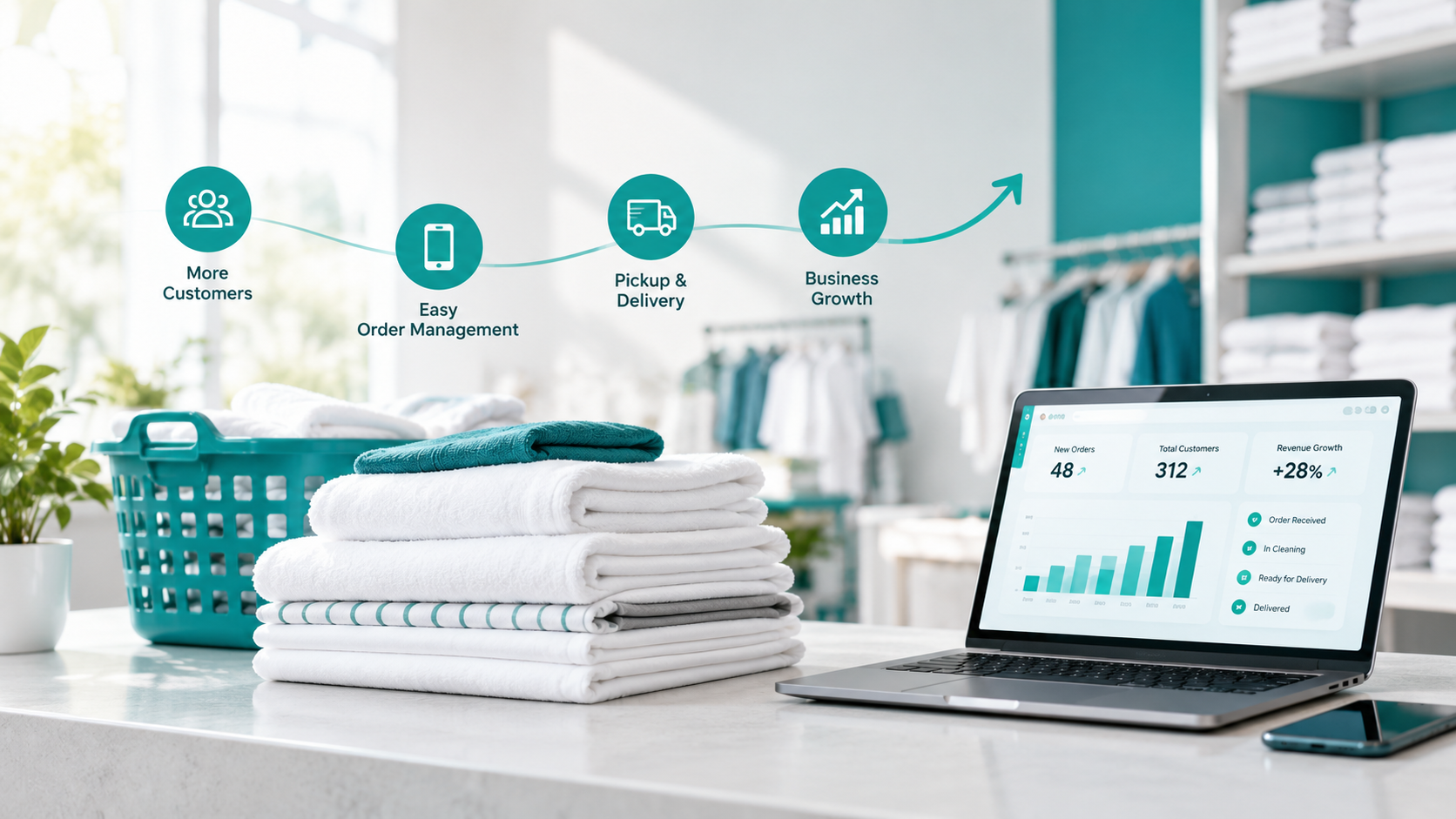
Introduction: Why Laundry Businesses Are Going Digital
The laundry industry is evolving as customers increasingly look for convenient services, reliable cleaning and easier ways to place orders. For local laundry shops, dry cleaners and independent service providers, this shift creates an opportunity to reach more customers and improve everyday operations.
Traditionally, many laundry businesses have relied on walk-in customers, phone calls, WhatsApp messages and handwritten registers. These methods can work well for a small operation, but managing multiple orders, customer requests and pickup schedules can become complicated as the business grows.
A digital platform can provide another way for customers to discover laundry services and submit requests. Depending on its features, it may also help businesses organise order information, coordinate pickups, communicate with customers and review operational performance.
For laundry entrepreneurs in India, adopting digital tools does not necessarily mean replacing an existing shop or investing in a custom mobile application. It can be a practical way to complement existing operations, reach new audiences and build a more organised business.
In this guide, LaunderGo explores the benefits of digital platforms for laundry partners, how technology can support daily business operations, what owners should consider before joining a platform, and how to evaluate opportunities for sustainable growth.
What Is a Digital Platform for Laundry Businesses?
A digital laundry platform connects customers looking for laundry or professional cleaning services with businesses that provide them. Depending on the business model, the platform may support service discovery, order requests, pickup and delivery coordination, customer communication or other parts of the service process.
For a laundry partner, this can create an additional channel for potential customers to discover its services without depending entirely on people visiting the physical shop.
For example, a laundry shop in Noida may already serve customers from nearby residential societies. An online platform could provide another way for people searching for laundry services in the area to discover the business, subject to the platform's coverage and availability.
The exact benefits depend on the platform's capabilities, customer demand, commercial terms and the responsibilities agreed upon by the business and platform operator.
To understand the wider changes happening in the industry, read our guide to smart laundry technology and how digital platforms are changing laundry services in India.
Why Are Laundry Businesses Moving Towards Digital Platforms?
Customers increasingly value convenience, clear service information and dependable communication. Working professionals may have limited time to visit a laundry shop, students may need reliable cleaning services near their accommodation, and families may prefer arranging laundry around their schedules.
At the same time, laundry businesses must manage garment handling, service quality, customer expectations, pricing and operating costs. Digital tools can help organise some of these activities while providing an additional channel for customer acquisition.
Here are some common reasons laundry businesses explore digital platforms:
- To improve online discoverability.
- To reach potential customers beyond existing walk-in traffic.
- To organise customer requests and order information.
- To improve communication and service coordination.
- To explore pickup and delivery opportunities where available.
- To make operational information easier to track.
- To complement existing marketing and customer-retention activities.
However, technology alone cannot guarantee growth. A successful laundry business still needs competitive pricing, consistent cleaning quality, reliable turnaround times and good customer service.
10 Benefits of Using a Digital Platform for Laundry Partners
1. Reach More Potential Customers
A traditional laundry shop often attracts customers who live or work nearby. While local relationships and referrals are valuable, relying exclusively on walk-in customers can limit how new customers discover the business.
A digital platform can create an additional discovery channel. Customers searching online for washing, ironing, dry cleaning or other garment-care services may discover participating businesses, depending on the platform's coverage and visibility.
For laundry partners, this creates an opportunity to introduce their services to customers who may not otherwise know about the shop.
For example, a dry cleaner serving one residential neighbourhood in Delhi NCR could explore additional digital channels to reach customers in its supported service area.
For more practical ideas, read our guide on why laundry shops struggle to get enough orders and what business owners can improve.
2. Reduce Dependence on Walk-In Orders
Walk-in customers remain important to many laundry businesses. However, customers who prefer online enquiries or doorstep collection may choose a service that offers a more convenient way to get started.
A suitable digital platform can provide an additional route for customers to request services. This may help businesses diversify their order sources instead of depending on a single acquisition channel.
Before adopting a platform, owners should evaluate whether it serves their location, attracts the right customers and offers a business model that fits their operational capacity.
Online visibility does not guarantee additional orders. Actual results depend on customer demand, competition, pricing, service quality and platform reach.
3. Simplify Laundry Order Management
Managing orders through handwritten registers, phone calls and multiple chat conversations can become difficult when the number of customers increases.
Depending on the features available, digital order-management tools can help organise information such as:
- Customer contact details and order references.
- Garment categories and requested services.
- Special cleaning instructions.
- Pickup requests and delivery requirements.
- Order status and expected completion dates.
- Customer communication and follow-up details.
Organised order information can make it easier to identify pending work, coordinate staff and reduce avoidable confusion.
Businesses should still maintain appropriate procedures for garment tagging, counting, quality checks and complaint handling. Digital tools support these processes but do not replace the need for reliable operational practices.
To understand how much work your shop can handle, read our laundry business capacity planning guide.
4. Improve the Customer Experience
Customers generally want to know which services are available, how to place an order, what the service costs and when their clothes may be ready.
A well-designed digital service journey can make these steps more convenient. Clear service descriptions, accessible contact options and timely updates can help customers understand what to expect.
For laundry partners, better communication can reduce repeated enquiries and help establish trust with customers.
For example, explaining the difference between wash and iron, wash and fold, and dry cleaning can help customers select the appropriate service before placing an order.
Consistent communication is particularly important when handling delicate garments, special instructions, revised delivery estimates or customer complaints.
5. Create Opportunities for Pickup and Delivery
Doorstep pickup and delivery can be attractive to customers who have limited time to visit a laundry shop. It can also provide an additional service opportunity for businesses that have the operational capacity to support it.
Depending on the platform and partnership arrangement, digital tools may help coordinate collection requests, communicate pickup details and organise delivery expectations.
Before introducing doorstep services, laundry partners should evaluate transport costs, staff availability, collection routes, turnaround times and minimum order values.
These details matter because an increase in orders does not automatically translate into higher profit if delivery expenses and operational costs are too high.
Learn more about the customer side of this service model in our article on laundry pickup and delivery and how the service works.
6. Reduce Repetitive Administrative Work
Repeatedly answering the same questions, searching through chat histories and manually tracking pending orders can take time away from cleaning operations.
Where supported, digital tools can centralise information and make routine activities easier to follow. Organised order records, standardised service descriptions and structured customer requests may reduce unnecessary administrative effort.
For example, keeping order details in one accessible system can make it easier for authorised staff members to check an order's requirements without searching through multiple conversations.
The amount of time saved depends on the tools available, staff adoption and the effectiveness of the business's existing processes.
7. Build a Stronger Online Presence
Customers frequently research local services before choosing a provider. A clear online presence can help a laundry business communicate its location, services, opening hours and contact information.
Digital platforms may provide an additional discovery channel. Laundry owners can complement this by maintaining accurate business listings, collecting genuine customer feedback and publishing useful garment-care information.
For example, a laundry business in Noida Sector 62 may benefit from clearly describing its service area and available cleaning options so potential customers can determine whether it meets their needs.
Online visibility takes time to develop. Joining a platform does not guarantee higher search rankings, a particular number of enquiries or a fixed level of revenue.
8. Understand Business Performance More Clearly
Business owners need more than order volume to determine whether their operations are performing well. They also need to consider average order value, labour expenses, cleaning costs, delivery charges, rework and customer retention.
If a platform or management system provides reporting features, laundry partners may be able to review information such as:
- Order volumes across different periods.
- Frequently requested services.
- Average order value.
- Order completion and cancellation patterns.
- Customer feedback and repeat orders, where tracked.
These insights can help owners identify bottlenecks, assess service demand and make more informed decisions about staffing, pricing and capacity.
Not every platform provides all these reports. Before joining, confirm which information is available and whether it can be exported or used for business planning.
9. Explore Digital Growth Without Building Your Own App
Developing a custom mobile application or complete online ordering system can require ongoing investment in software development, hosting, security, maintenance and customer acquisition.
For some independent laundry businesses, joining an existing digital platform may be a more practical starting point than building a complete technology product independently.
A suitable partnership may offer access to digital discovery or operational features without requiring the business to develop and maintain its own application.
However, laundry owners should compare any onboarding fees, commissions, subscriptions, service obligations and technology limitations with the cost of operating independently.
The best option depends on the business's size, objectives, budget and expected customer demand.
10. Focus on Cleaning Quality and Customer Retention
Technology can help organise the customer journey, but cleaning quality remains central to a successful laundry business.
Customers are more likely to trust a service when garments are handled carefully, orders are completed as promised, pricing is communicated clearly and problems are resolved professionally.
By making routine coordination easier, suitable digital tools may help business owners and their teams devote more attention to cleaning quality, employee training and customer relationships.
Digital adoption should support reliable operations rather than become a substitute for them.
Traditional Laundry Operations vs Digital-Supported Operations
| Business activity | Traditional approach | Digital-supported approach |
|---|---|---|
| Customer discovery | Walk-ins, referrals and local advertising | Existing channels plus online discovery where available |
| Order records | Paper registers, phone calls or chat histories | Digital records and organised order-management tools |
| Customer communication | Individual calls and messages | Structured communication and status updates where supported |
| Pickup coordination | Manual scheduling and phone coordination | Digital requests and scheduling tools where available |
| Business reporting | Manual calculations and registers | Reports or dashboards if the system provides them |
| Business expansion | Investment in additional locations or independent channels | Potential access to additional digital channels, subject to coverage |
Digital tools do not automatically make every process faster or more profitable. The best results come from selecting appropriate tools, training staff and measuring whether the changes improve daily operations.
How Can a Small Laundry Shop Start Going Digital?
A laundry business does not need to change every part of its operation at once. A gradual approach can help owners adopt technology without unnecessarily disrupting existing customers.
Step 1: Identify Your Biggest Business Challenge
Start by identifying the main problem you want to solve. It could be limited customer reach, disorganised order records, repeated enquiries or difficulty coordinating pickups.
Choose a digital solution based on that need rather than paying for features your business may not use.
Step 2: Organise Your Services and Pricing
Create a clear list of services, prices, turnaround expectations and minimum order requirements, if applicable. Specify which garments require special handling or separate quotations.
Accurate service information helps customers make informed choices and reduces confusion when orders are placed.
Step 3: Evaluate Suitable Digital Platforms
Compare platforms based on service-area coverage, customer discovery, order-management features, customer support, payment arrangements and commercial terms.
Ask whether the platform provides customer enquiries, manages transactions, coordinates logistics or simply lists businesses. These models have different costs and responsibilities.
Step 4: Establish a Reliable Order Workflow
Define how every order will be received, tagged, cleaned, checked and handed over to the customer. Assign clear responsibilities to staff members and document how complaints or missing items will be handled.
Step 5: Train Your Team
Make sure employees understand how to record orders accurately, communicate with customers and use the selected digital tools. Start with the most important workflows before introducing more complex processes.
Step 6: Measure the Results
Track relevant metrics before and after adopting a new platform. Review completed orders, revenue, operating costs, customer feedback and repeat business.
Use these results to determine whether the platform is delivering sufficient value for your business.
Is Joining a Digital Laundry Platform Worth It?
Joining a digital platform may be worth considering if your business wants to reach additional customers, simplify order coordination or explore online service requests.
However, the decision should be based on your business model rather than the assumption that digital platforms always increase revenue.
Before signing up, consider these questions:
- Does the platform serve customers in your operating area?
- How are customer orders or enquiries allocated?
- Are there onboarding fees, commissions or recurring charges?
- Who is responsible for pickup, delivery and customer support?
- How are payments, cancellations, refunds and disputes handled?
- Can you review order details and business performance?
- What service standards and turnaround times are expected?
- How will customer information be accessed and protected?
A platform is more likely to be a good fit when its commercial terms, service model and technology align with your operational capacity and business goals.
Pricing is another important factor. Read our guide to seven signs that your laundry pricing may be hurting profitability before making major decisions about discounts, delivery fees or expansion.
How LaunderGo Supports the Digital Laundry Ecosystem
LaunderGo aims to make laundry and professional cleaning services more accessible through a digital platform connecting customers with service options.
For laundry businesses, participating in a suitable digital ecosystem can create an opportunity to explore additional customer discovery and digital service workflows alongside existing business operations.
Business owners interested in digital growth can also read our guide on growing a laundry business with LaunderGo and our practical article on how to start and grow a laundry business.
To explore partnership information, visit the LaunderGo laundry partners page. You can also use the store locator to explore available service locations.
Prospective partners should confirm current eligibility, service-area coverage, onboarding requirements, available features, applicable charges and the exact terms of the partnership directly with LaunderGo. Available services and responsibilities may vary by location and arrangement.
Challenges Laundry Businesses Should Consider Before Going Digital
Digital adoption can create opportunities, but it also requires planning and consistent execution.
Managing Additional Demand
Receiving more enquiries is useful only when the business has enough staff, equipment and capacity to fulfil orders reliably. Assess your existing workload before accepting additional work.
Maintaining Service Quality
As order volumes grow, garment tagging, quality checks, delivery coordination and customer communication become increasingly important. Establish clear processes before scaling.
Understanding Platform Costs
Before joining any digital laundry platform, understand its business model and terms. Joining LaunderGo as a laundry partner is free, making it an opportunity for laundry businesses to explore digital partnership opportunities without a joining fee.
When evaluating other platforms, review their individual terms carefully, including any applicable commissions, subscriptions, delivery expenses or other charges. Always understand the commercial arrangement before making a decision.
Adapting to New Technology
Employees may need time and training to adopt digital tools. Start with simple workflows and explain how the changes can make everyday work easier.
Protecting Customer Information
Use authorised systems, restrict access to customer information and follow applicable privacy requirements. Understand how the platform handles customer data before joining.
Related Guides for Laundry Business Owners
Explore these additional LaunderGo resources for practical advice on operations, technology and business growth:
- Smart Laundry Technology: How Digital Platforms Are Changing Laundry Services in India
- Got a Laundry Shop but Still Not Getting Enough Orders? Here's What You're Missing
- How Many Laundry Orders Can Your Shop Actually Handle? A Capacity Planning Guide
- Are You Charging Too Little for Laundry? 7 Signs Your Pricing Is Hurting Your Business
- Laundry Pickup and Delivery: A Simple Guide to Hassle-Free Laundry
- Grow Your Laundry Business with LaunderGo
- How to Start and Grow Your Laundry Business with LaunderGo
Conclusion: Build a More Connected Laundry Business
Digital platforms are creating new ways for laundry businesses to connect with customers, organise orders and explore growth opportunities. For independent laundry shops and dry cleaners, the right tools can complement existing customer relationships and help bring more structure to daily operations.
The most important step is to choose a platform that matches your service area, operating capacity and financial goals. Clear pricing, reliable cleaning, organised workflows and good customer communication remain essential, regardless of the technology used.
If you are a laundry business owner exploring digital growth opportunities, visit the LaunderGo laundry partners page to learn more about the available partnership information and determine whether the model is suitable for your business.
Frequently Asked Questions
Related articles
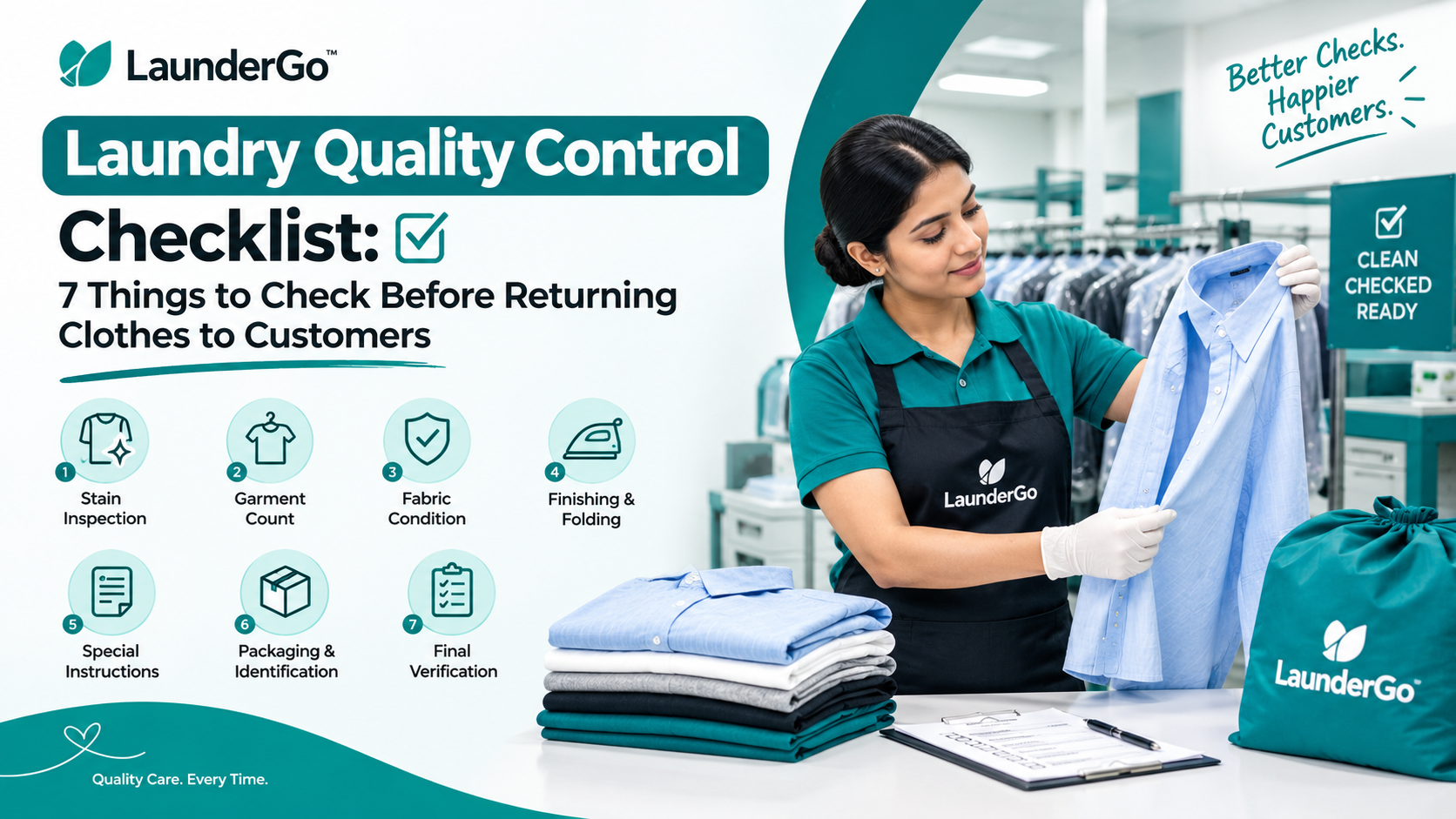
Laundry Quality Control Checklist: 7 Things to Check Before Returning Clothes to Customers
A clean garment should also be checked before it reaches the customer. Discover 7 practical quality control checks for laundry businesses, from stain inspection and garment counting to finishing, packaging and final order verification. This checklist can help laundry teams reduce avoidable mistakes and deliver a more consistent customer experience.
Oct 14, 2026
Laundry Services for Students and Professionals in Noida Sector 62 & 63: What to Look For
Living in a PG, hostel or rented flat in Noida Sector 62 or 63? Finding a laundry service that fits your schedule, budget and clothing needs can make everyday life easier. Discover what to check before choosing a local laundry provider, from cleaning quality and pricing to pickup, delivery and garment care.
Oct 11, 2026
How Many Laundry Orders Can Your Shop Actually Handle? A Simple Capacity Planning Guide
Getting more laundry orders sounds great until your machines, staff and delivery timelines cannot keep up. Learn how to calculate your laundry shop's real capacity and scale orders without compromising quality.
Oct 6, 2026
How to Remove Ink Stains from Clothes: What Works and What to Avoid
Ink stains can ruin a perfectly good shirt, trouser or school uniform in seconds. Learn how to remove ink stains from clothes, what works for different types of ink, which home remedies to avoid and when professional stain removal is safer.
Oct 5, 2026