

Introduction
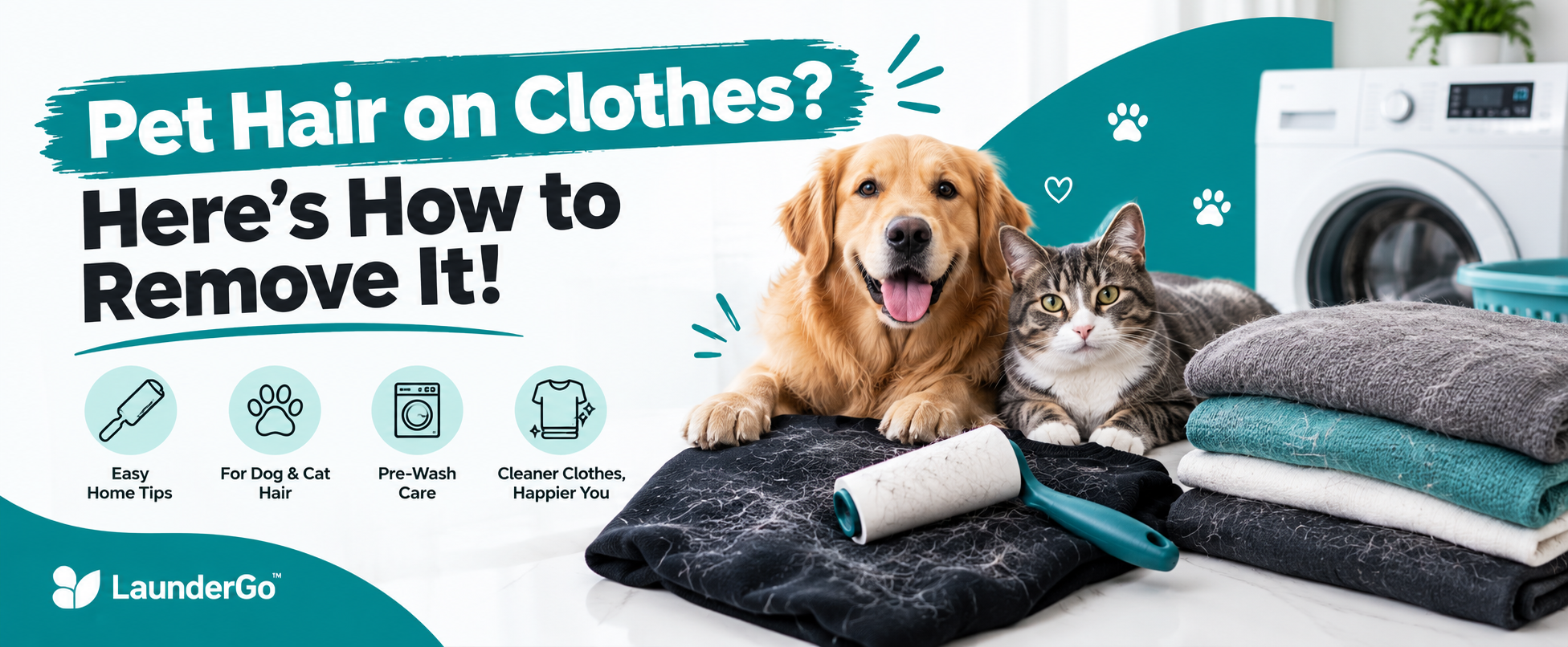
If you live with a dog or cat, you probably know how easily pet hair can stick to your favourite clothes. A black T-shirt may look freshly washed, but a few minutes with your pet can leave it covered in visible fur. Pet hair can cling to trousers, sweaters, jackets, blankets and other fabrics, making clothes look less clean than they are. The good news is that you do not always need to wash a garment again to remove pet hair. With the right tools and a few simple habits, you can remove loose fur, reduce hair buildup and make laundry easier to manage. In this guide, we explain how to remove pet hair from clothes, what to do before washing, which methods work best for different fabrics and how to keep your laundry routine more manageable.Why Does Pet Hair Stick to Clothes?
Pet hair can become trapped in fabric fibres because of the texture of the material, static electricity and the way the garment is worn or handled. Some fabrics hold onto fur more strongly than others. Pet hair is often more noticeable on:- Black and dark-coloured clothing
- Fleece and other soft, textured fabrics
- Woollen sweaters and knitwear
- Blankets and upholstered-fabric garments
- Clothing that frequently comes into contact with pets
How to Remove Pet Hair from Clothes
1. Use a Lint Roller
A lint roller is one of the easiest tools for removing pet hair from everyday clothing. Roll it gently over the garment, paying particular attention to sleeves, shoulders, trousers and other areas where fur collects. Replace the adhesive sheet when it stops picking up hair effectively. For small amounts of fur, this method is quick and convenient before leaving home.2. Try a Clothes Brush
A fabric-safe clothes brush can help lift loose pet hair from many everyday garments. Brush in one direction using gentle strokes and follow the garment's care instructions. Avoid aggressive brushing on delicate knits, loosely woven fabrics or garments that may snag.3. Use a Slightly Damp Microfibre Cloth
For some washable, durable fabrics, a clean microfibre cloth that is only slightly damp can help collect loose fur. Wipe the garment gently in one direction rather than rubbing repeatedly. Test a small, hidden area first. Do not use this method on fabrics that may water-spot, bleed colour or require specialised cleaning.4. Use a Fabric-Safe Pet Hair Removal Tool
Reusable pet hair removal tools can be useful for larger areas, such as trousers, sweatshirts and casual jackets. Choose a tool suitable for the fabric and follow its instructions. Use extra care with knitwear and delicate materials because rough scraping can pull threads or damage the surface.5. Check Pockets, Seams and Folds
Pet hair can collect in pockets, cuffs, hems and seams. Before washing, turn garments inside out when appropriate and remove visible fur from these areas. This simple check can reduce the amount of loose hair that enters the washing machine.How to Remove Pet Hair Before Washing Clothes
Removing as much loose fur as possible before washing can help prevent it from spreading across the load. Follow these steps:- Separate heavily fur-covered garments from other laundry.
- Use a lint roller or fabric-safe brush to remove loose hair.
- Check pockets, cuffs and seams for trapped fur.
- Read the care labels and sort clothes by colour and fabric type.
- Wash garments using the appropriate cycle and detergent instructions.
- Check the clothes after washing and before drying.
Can You Remove Pet Hair in the Washing Machine?
A washing machine may remove some loose pet hair, but it should not be relied on as the only solution. Hair can remain attached to fibres or collect in the machine and on other garments. For better results, remove visible fur before washing. Clean the lint filter or other accessible components only as instructed in your appliance manual. If your machine has a dedicated pet-hair or extra-rinse programme, check the manufacturer's guidance before using it. Avoid adding unapproved chemicals or cleaning products to the machine. Always follow the appliance and detergent instructions.How to Remove Pet Hair from Different Fabrics
Cotton T-Shirts and Shirts
A lint roller or soft clothes brush is usually a practical first choice. Check collars, sleeves and the front of the garment, where pet hair can be especially noticeable.Black and Dark-Coloured Clothes
Pet hair stands out clearly against dark fabrics. Use a lint roller before wearing the garment and keep one handy for quick touch-ups.Sweaters and Knitwear
Use a gentle clothes brush or a tool specifically designed for knitwear. Avoid strong rubbing or sharp-edged tools that could pull threads and create snags.Delicate and Special-Care Garments
For silk, structured garments, embellished clothing or items marked dry-clean only, avoid experimenting with adhesive products, moisture or abrasive tools. Follow the care label and seek professional advice when needed.Common Mistakes to Avoid
- Washing clothes without removing loose fur first: Hair may spread to other items in the load.
- Rubbing too aggressively: Excessive friction can damage fabric fibres or create pilling.
- Using sticky tape carelessly: Strong adhesives may leave residue or affect delicate surfaces.
- Overloading the washing machine: Crowded garments have less room to move freely.
- Ignoring the care label: Not every removal method is suitable for every fabric.
- Putting fur-covered clothes straight into a dryer: Follow the appliance instructions and remove as much loose hair as practical first.
How to Prevent Pet Hair from Building Up on Clothes
You may not be able to prevent every strand of fur, but a few habits can make a noticeable difference.- Keep a lint roller near your wardrobe or entrance.
- Brush your pet regularly using grooming tools suitable for its coat.
- Store clean clothes in a closed wardrobe or drawer.
- Keep frequently used pet blankets separate from freshly washed clothing.
- Remove visible hair from clothes before placing them in the laundry basket.
- Clean washable pet bedding according to its care instructions.
- Check dark clothing before wearing it, especially after sitting with your pet.
When Should You Consider Professional Laundry Care?
Home methods are often enough for everyday pet hair on durable fabrics. However, professional laundry care may be a better choice when a garment is delicate, expensive, heavily soiled or requires specialised cleaning. Consider seeking professional help if:- The garment is labelled dry-clean only.
- Pet hair is deeply embedded in a textured fabric.
- The item has embellishments or a special finish.
- You are concerned about damaging the material.
- You need help managing a large volume of laundry.
More Clothing Care Tips from LaunderGo
Taking care of clothes involves more than removing visible fur. If you have other clothing-care concerns, explore these useful resources:- How to Remove Ink Stains from Clothes: What Works and What to Avoid
- Visit LaunderGo for laundry services and clothing-care information
Final Thoughts
Pet hair on clothes can be frustrating, but it does not always mean that a garment needs another wash. A lint roller, a suitable clothes brush and a quick check before laundry can help remove loose fur and keep clothing looking presentable. The key is to choose a removal method that suits the fabric, avoid excessive rubbing and remove as much loose hair as possible before washing. With a few consistent habits, you can spend less time dealing with pet hair and more time enjoying life with your furry companion. ```Frequently Asked Questions
Related articles
How to Remove Oil and Grease Stains from Clothes: A Complete Guide
Oil and grease stains can quickly make clothes look dirty and difficult to clean. Learn how to remove fresh and old oil stains from clothes, which cleaning methods work best, common mistakes to avoid, and when professional laundry care is a better option.
Oct 8, 2026
How to Remove Ink Stains from Clothes: What Works and What to Avoid
Ink stains can ruin a perfectly good shirt, trouser or school uniform in seconds. Learn how to remove ink stains from clothes, what works for different types of ink, which home remedies to avoid and when professional stain removal is safer.
Oct 5, 2026
How to Remove Colour Bleeding from Clothes: What Actually Works and What to Avoid
Did a red, black or blue garment stain your clothes in the wash? Learn how to remove colour bleeding, what to do immediately, which home remedies to avoid and when professional laundry care is safer.
Oct 4, 2026
Can You Put Everything in the Washing Machine? 12 Things You Should Never Wash in It
Think you can wash everything in your washing machine? Think again. Here are 12 clothes and household items that can shrink, tear, lose their shape or even damage your washing machine when washed incorrectly.
Sep 30, 2026