

Introduction
Every monsoon, the same problem shows up in almost every home in Delhi NCR: clothes go into the wash clean, and come out two days later smelling worse than before they were washed. It's not the detergent's fault, and it's not "just how monsoon is." It's almost always down to one thing — clothes staying damp for too long. Bacteria and mildew need moisture and time, and monsoon indoor drying gives them both, unless you actively fight back. Here's a complete system for drying clothes indoors during the rainy season without that musty smell.
Why Monsoon Laundry Smells Different
In dry weather, clothes lose moisture fast enough that odour-causing bacteria never really get a foothold. During monsoon, humidity in the air is already high, so wet clothes take far longer to dry — sometimes 8 to 12 hours longer than they would on a sunny day. That extended damp window is exactly when bacteria multiply and produce the sour, musty smell most people associate with "monsoon laundry." The fix isn't a different detergent — it's cutting down that damp window as much as possible.
Step 1: Get the Wash Right Before You Even Start Drying
Don't Overload the Machine
A packed washing machine drum can't spin water out efficiently, which means clothes come out wetter than they should. During monsoon specifically, wash smaller loads than usual — even if it means running the machine more often. Less water retained after the spin cycle means less time spent damp afterward.
Use the Highest Safe Spin Speed
Check your fabric care labels, but where possible, use a higher spin setting during monsoon months. The more water the machine extracts mechanically, the less your indoor drying setup has to deal with.
Add a Vinegar or Antibacterial Rinse for Heavily Worn Items
For gym clothes, socks, or anything with heavy sweat buildup, adding a small amount of white vinegar to the rinse cycle helps neutralise odour-causing bacteria before drying even begins — it's a cheap, effective pre-emptive step.
Step 2: Build an Airflow-First Drying Setup
The single biggest mistake people make with indoor drying is treating it the same as outdoor drying — just hanging clothes and walking away. Indoors, without sun and wind doing the work, airflow becomes everything.
Space Clothes Generously
Clothes touching each other trap moisture between the layers, which is often where the smell starts first. Leave a fist-width gap between hanging garments, even if it means doing the load in two batches.
Use a Fan, Not Just a Room
Position a table or pedestal fan to blow directly across the hanging clothes, not just around the room. Moving air pulls moisture off the fabric surface far faster than still air, even in a humid room. If you have a fan with an oscillating setting, use it — even coverage matters more than raw power.
Choose the Right Room
Kitchens and bathrooms are usually the most humid rooms in the house — avoid drying clothes there if you can. A room with a window that gets some cross-ventilation, even without direct sun, will always outperform a closed, damp space.
Crack a Window or Door for Cross-Ventilation
Even during light rain, a slightly opened window on the opposite side of the room from your fan creates a path for moist air to escape rather than recirculate.
Step 3: Speed Up Drying With Smart Placement
Hang Thicker Items Separately
Jeans, towels, and bedsheets hold far more water than shirts and take much longer to dry. Hang these on their own drying line or rack, ideally closest to the fan, so they don't slow down the rest of the load.
Turn Clothes Inside Out Halfway Through
This exposes the side that usually stays damp longest (seams, pockets, waistbands) directly to airflow, cutting overall drying time noticeably.
Use a Dehumidifier If You Have One
Even a small room dehumidifier running near your drying setup can pull enough moisture out of the air to meaningfully shorten drying time — especially useful during multi-day rain spells when opening a window isn't an option.
Step 4: Prevent Musty Smell Even If Clothes Take Longer to Dry
Don't Let Wet Clothes Sit in a Pile — Ever
Even a short wait before hanging can be enough for smell to start setting in. Hang clothes immediately after the wash cycle finishes, not after your next chore is done.
Add a Few Drops of Essential Oil or Fabric Freshener to Damp Areas
A drop of tea tree or eucalyptus oil on a cloth placed near your drying rack has mild antibacterial properties and helps mask any early musty notes while clothes finish drying.
Keep the Drying Area Separate From Where You Store Dry Clothes
Storing already-dry clothes in the same humid corner where you're drying new laundry can transfer moisture back onto them — always keep dry, folded clothes in a separate, ventilated space.
When Indoor Drying Still Isn't Enough
Some monsoon weeks bring days of continuous, heavy rain with almost no drop in humidity — and even a well-optimised indoor setup will struggle. In these stretches, it's often faster and more reliable to send heavier loads (towels, bedsheets, jeans) to a professional laundry service with commercial dryers, rather than let them sit damp for two or three days indoors.
If your monsoon laundry pile is getting out of hand, schedule a pickup with LaunderGo — our machines dry clothes fully and fast, no matter how long the rain lasts.
Related articles
How to Remove Pet Hair from Clothes: Easy Tips That Actually Work
Pet hair sticking to your favourite clothes can be frustrating, especially on black and dark fabrics. Learn how to remove dog and cat hair using simple tools, prepare clothes before washing, reduce hair buildup in your laundry and protect delicate garments.
Oct 10, 2026
How to Remove Oil and Grease Stains from Clothes: A Complete Guide
Oil and grease stains can quickly make clothes look dirty and difficult to clean. Learn how to remove fresh and old oil stains from clothes, which cleaning methods work best, common mistakes to avoid, and when professional laundry care is a better option.
Oct 8, 2026
How to Remove Ink Stains from Clothes: What Works and What to Avoid
Ink stains can ruin a perfectly good shirt, trouser or school uniform in seconds. Learn how to remove ink stains from clothes, what works for different types of ink, which home remedies to avoid and when professional stain removal is safer.
Oct 5, 2026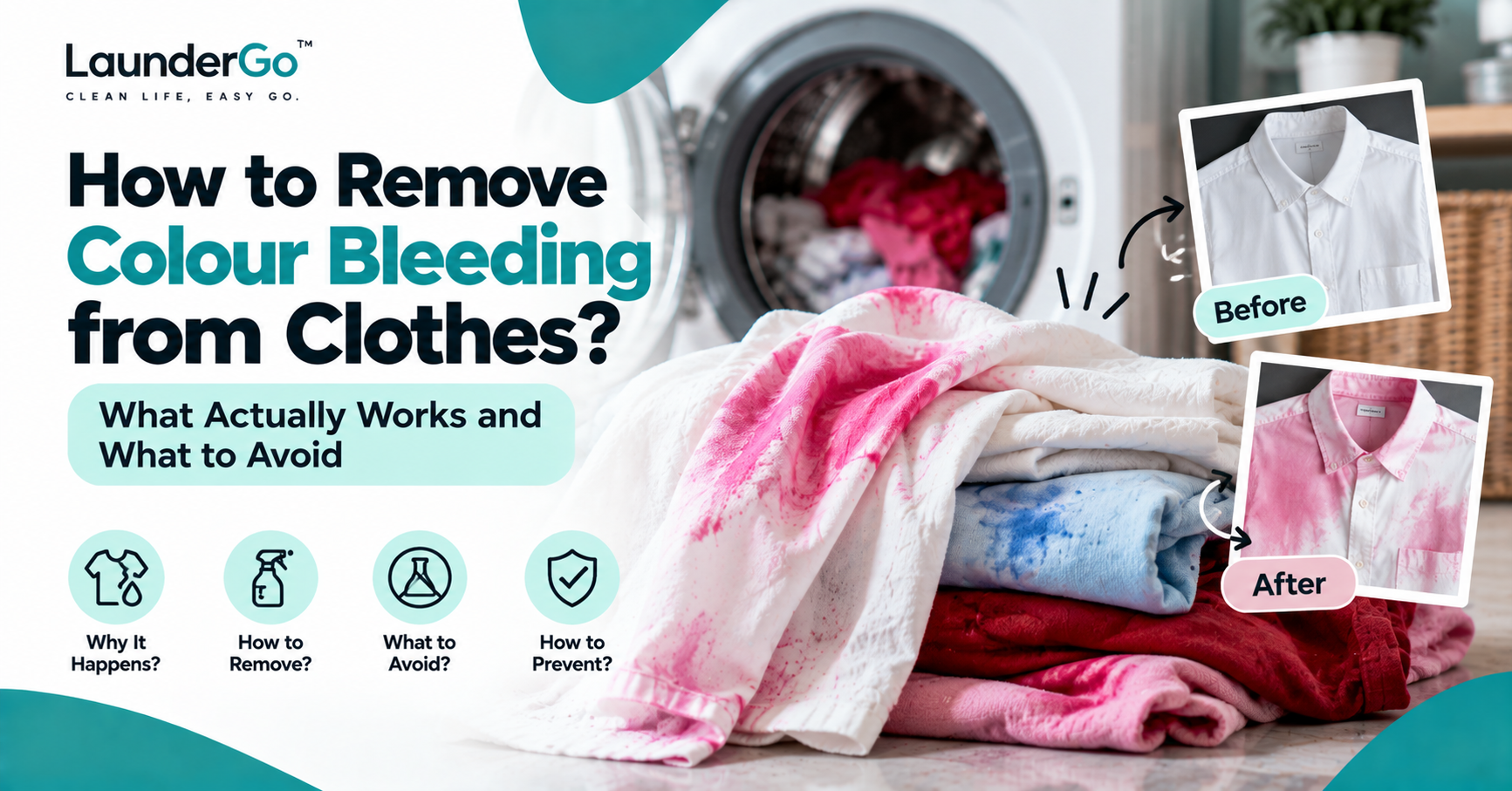
How to Remove Colour Bleeding from Clothes: What Actually Works and What to Avoid
Did a red, black or blue garment stain your clothes in the wash? Learn how to remove colour bleeding, what to do immediately, which home remedies to avoid and when professional laundry care is safer.
Oct 4, 2026