

Introduction
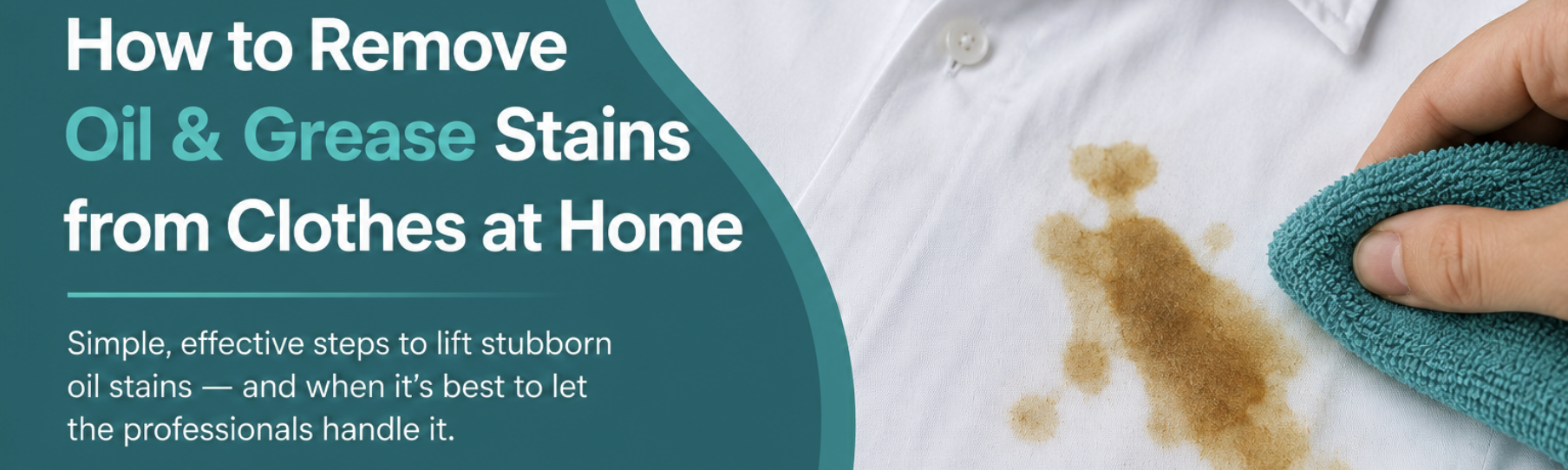
Nothing ruins a good outfit faster than an oil stain — a splash of curry, a dab of engine grease, or cooking oil that jumps out of the pan. The good news: oil-based stains are treatable if you act before they set. Here's a step-by-step guide to removing them at home, and how to tell when it's time to send the garment to a professional instead.
Why Oil Stains Are Tricky
Oil doesn't dissolve in water the way most stains do. It clings to fabric fibres and, if it sits too long or goes through a hot wash, it can bond permanently with the material. That's why speed and the right technique matter more than scrubbing hard.
Step-by-Step: Removing Fresh Oil Stains
1. Blot, Don't Rub
Use a clean cloth or paper towel to blot up excess oil immediately. Rubbing pushes the stain deeper into the fibres and spreads it wider.
2. Apply an Absorbent
Sprinkle cornstarch, talcum powder, or baking soda directly onto the stain and let it sit for 10-15 minutes. It draws oil out of the fabric before you even reach for detergent.
3. Brush Off and Pre-Treat
Brush away the powder, then apply a small amount of dish soap (it's designed to cut grease) directly onto the stain. Gently work it in with your fingers or a soft brush.
4. Wash in the Hottest Water the Fabric Allows
Check the care label first. If the fabric can handle it, wash in warm-to-hot water — cold water won't fully break down oil.
5. Check Before Drying
This is the step most people skip. Heat from a dryer can set an oil stain permanently. Always inspect the garment after washing — if any trace remains, repeat the treatment before drying.
What Doesn't Work
Avoid rubbing the stain aggressively, using very hot water on delicate or coloured fabrics without testing, or ironing over a stain to "dry it out" — all of these can set the oil permanently.
When to Call a Professional
Old or dried oil stains, stains on silk, wool, or delicate fabrics, and stains on clothes you can't risk damaging (formal wear, office shirts) are best left to professional dry cleaning. Professional-grade solvents lift oil without the fabric damage that DIY methods on delicate materials can cause.
If a stain isn't budging, schedule a pickup with LaunderGo and let our verified local experts handle it safely.
Frequently Asked Questions
Related articles
How to Remove Pet Hair from Clothes: Easy Tips That Actually Work
Pet hair sticking to your favourite clothes can be frustrating, especially on black and dark fabrics. Learn how to remove dog and cat hair using simple tools, prepare clothes before washing, reduce hair buildup in your laundry and protect delicate garments.
Oct 10, 2026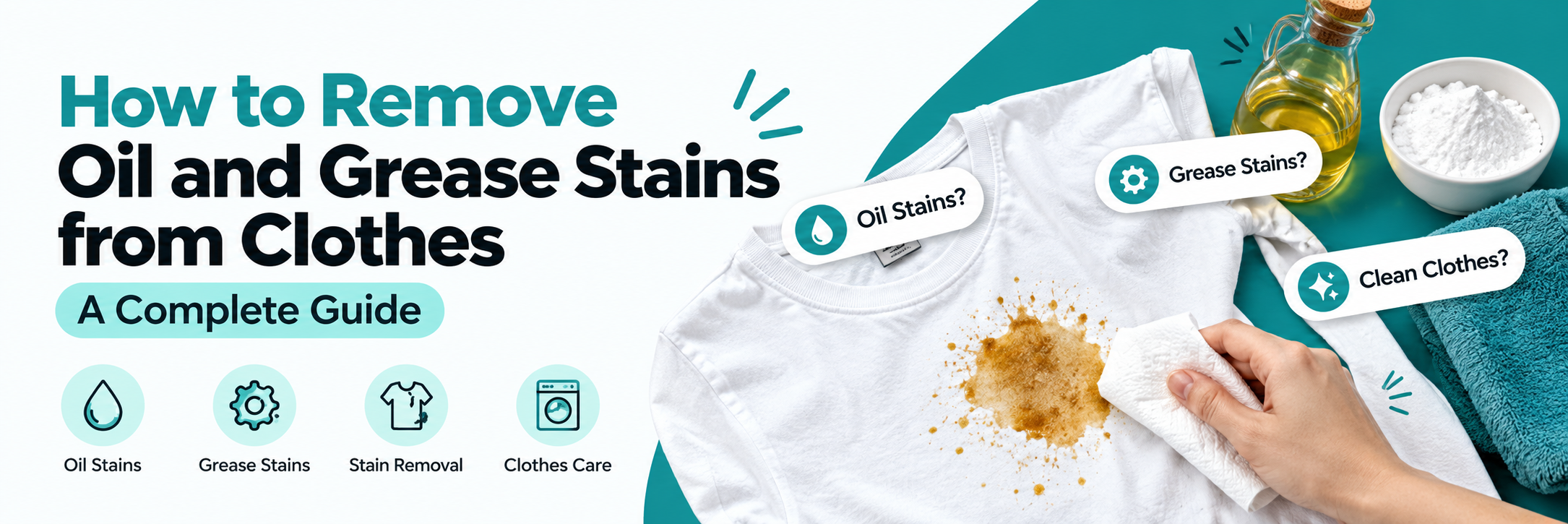
How to Remove Oil and Grease Stains from Clothes: A Complete Guide
Oil and grease stains can quickly make clothes look dirty and difficult to clean. Learn how to remove fresh and old oil stains from clothes, which cleaning methods work best, common mistakes to avoid, and when professional laundry care is a better option.
Oct 8, 2026
How to Remove Ink Stains from Clothes: What Works and What to Avoid
Ink stains can ruin a perfectly good shirt, trouser or school uniform in seconds. Learn how to remove ink stains from clothes, what works for different types of ink, which home remedies to avoid and when professional stain removal is safer.
Oct 5, 2026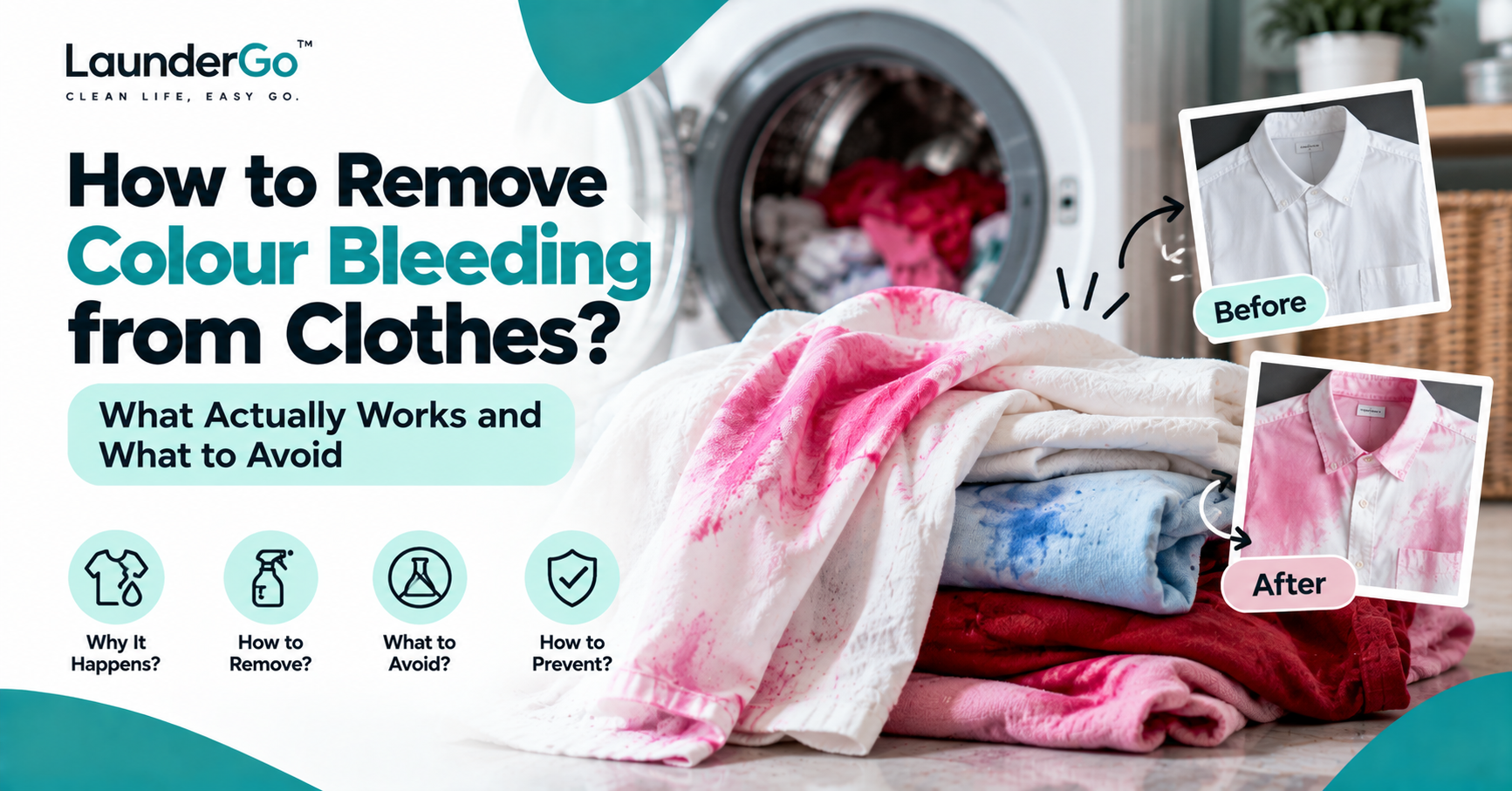
How to Remove Colour Bleeding from Clothes: What Actually Works and What to Avoid
Did a red, black or blue garment stain your clothes in the wash? Learn how to remove colour bleeding, what to do immediately, which home remedies to avoid and when professional laundry care is safer.
Oct 4, 2026