

Introduction
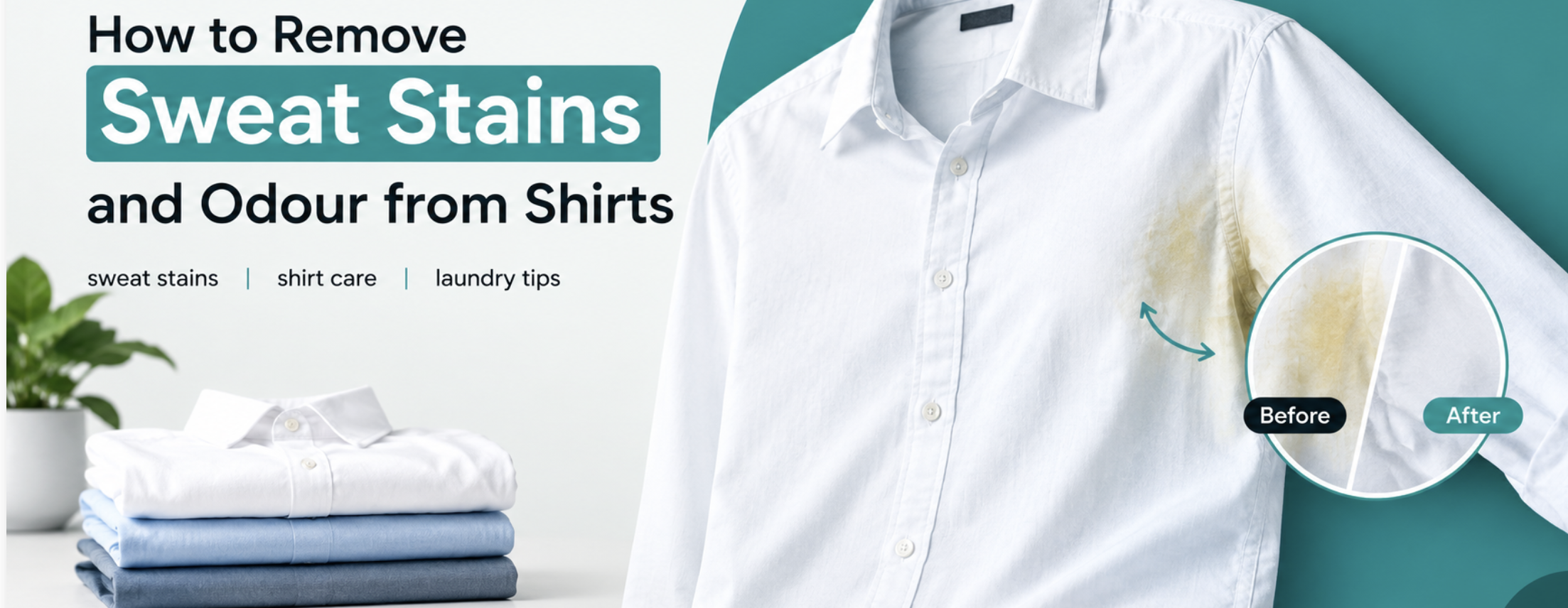
Sweat stains are one of the most misunderstood laundry problems. Most people assume it's just moisture that needs washing out, but the yellow tint and lingering smell actually come from a reaction between sweat, bacteria, and deodorant residue building up in the fabric over time. A regular wash often isn't enough to fully remove it — here's what actually works.
Why Sweat Stains Turn Yellow
The yellowing isn't from sweat alone — it's usually caused by aluminium compounds in antiperspirants reacting with sweat proteins on the fabric. This is why sweat stains are most common and most stubborn specifically in the underarm area, and why switching deodorants sometimes reduces staining even without changing your laundry routine.
Step-by-Step: Removing Fresh Sweat Stains
1. Pre-Treat Before Washing
Make a paste of baking soda and water, or use a mix of white vinegar and water, and apply it directly to the stained area. Let it sit for 15-30 minutes before washing — this breaks down the protein and residue buildup that plain detergent often misses.
2. Use an Enzyme-Based Detergent
Enzyme detergents are specifically designed to break down protein-based stains like sweat, blood, and food. Regular detergent alone often isn't enough for set-in sweat stains.
3. Wash in the Warmest Water the Fabric Allows
Warmer water helps dissolve the residue more effectively, but always check the care label first — hot water can shrink or damage certain fabrics.
4. Air Dry Before Confirming It's Gone
Avoid the dryer until you're sure the stain is fully removed. Heat can set any remaining residue permanently, making it far harder to treat afterward.
Removing the Odour, Not Just the Stain
Odour and staining are related but not identical problems — a shirt can look stain-free and still smell of sweat if bacteria weren't fully eliminated. Adding a cup of white vinegar to the rinse cycle, or soaking the garment in a mix of water and vinegar for 30 minutes before washing, helps neutralise odour-causing bacteria at the source rather than just masking the smell.
Preventing Sweat Stains Before They Start
- Let deodorant or antiperspirant dry fully before putting on a shirt — applying it right before dressing increases fabric contact and residue buildup
- Wash sweat-prone shirts within a day of wearing rather than letting them sit in a hamper, since bacteria continue building up over time
- Rotate deodorant brands occasionally if you notice consistent yellowing, as some formulations react more with certain fabrics than others
What to Do With Already Set-In, Old Stains
Old, already-yellowed stains are harder to fully reverse at home, especially on white or light-coloured fabric. Repeated treatment with an enzyme detergent and vinegar soak can improve them significantly, but a professional laundry service has access to stronger, targeted stain treatments that are more effective on stains that have already set for weeks or months.
Got shirts with stubborn, set-in sweat stains? Schedule a pickup with LaunderGo and let our team treat them properly, without risking damage from DIY guesswork.
Frequently Asked Questions
Related articles
How to Remove Pet Hair from Clothes: Easy Tips That Actually Work
Pet hair sticking to your favourite clothes can be frustrating, especially on black and dark fabrics. Learn how to remove dog and cat hair using simple tools, prepare clothes before washing, reduce hair buildup in your laundry and protect delicate garments.
Oct 10, 2026
How to Remove Oil and Grease Stains from Clothes: A Complete Guide
Oil and grease stains can quickly make clothes look dirty and difficult to clean. Learn how to remove fresh and old oil stains from clothes, which cleaning methods work best, common mistakes to avoid, and when professional laundry care is a better option.
Oct 8, 2026
How to Remove Ink Stains from Clothes: What Works and What to Avoid
Ink stains can ruin a perfectly good shirt, trouser or school uniform in seconds. Learn how to remove ink stains from clothes, what works for different types of ink, which home remedies to avoid and when professional stain removal is safer.
Oct 5, 2026
How to Remove Colour Bleeding from Clothes: What Actually Works and What to Avoid
Did a red, black or blue garment stain your clothes in the wash? Learn how to remove colour bleeding, what to do immediately, which home remedies to avoid and when professional laundry care is safer.
Oct 4, 2026