

Introduction
Have you ever looked at a clothing label and wondered what the small washing, drying or ironing symbols actually mean? These laundry care symbols provide important instructions for cleaning and maintaining your clothes.
Understanding washing symbols, drying symbols, ironing symbols and dry-cleaning symbols can help prevent problems such as shrinking, colour fading, fabric damage and unwanted wrinkles.
Whether you do laundry at home or use a professional laundry and dry-cleaning service, knowing how to read a care label is a simple way to take better care of your clothes.
What Are Laundry Care Symbols?
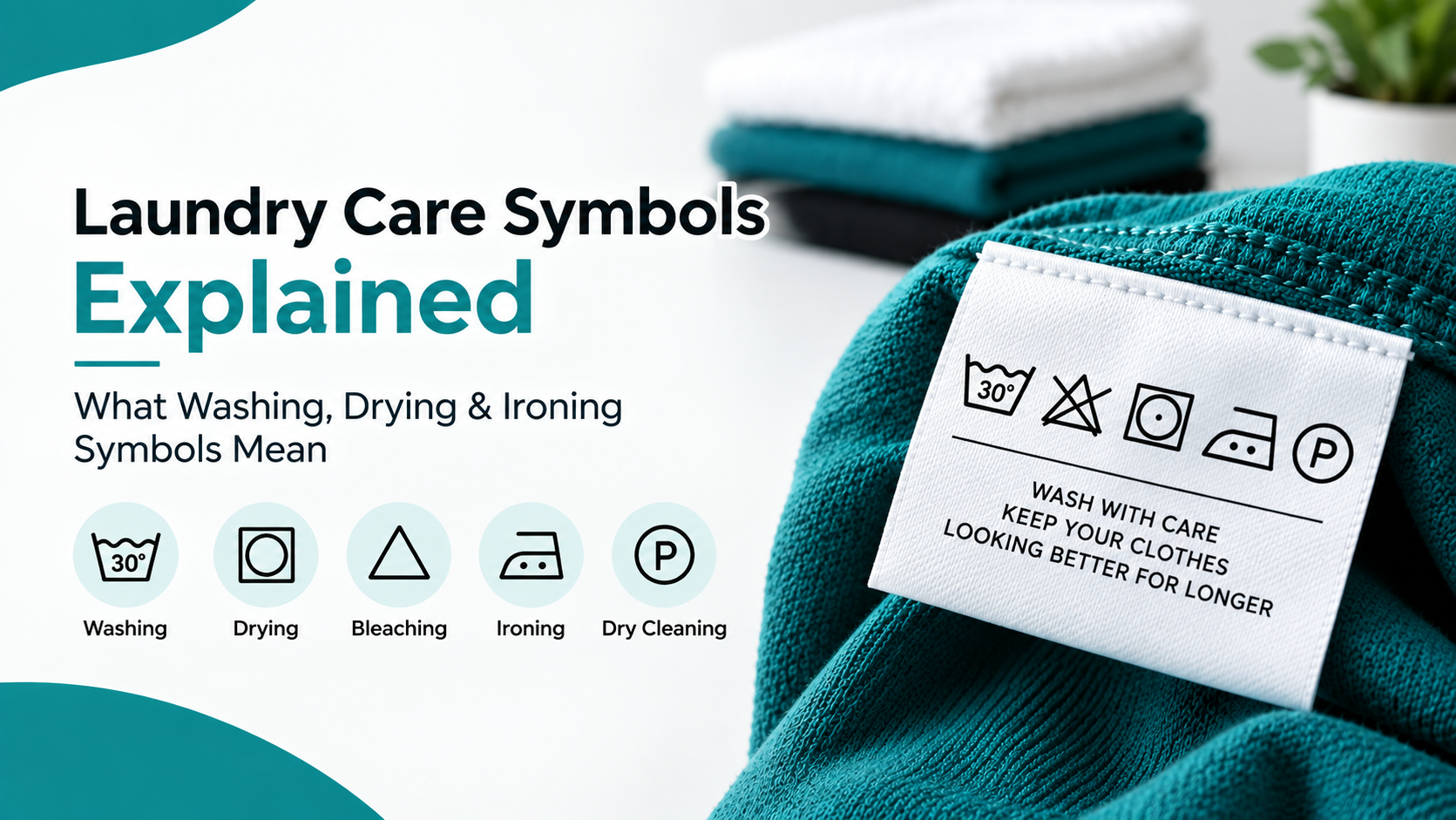
Laundry care symbols are standard icons printed on clothing labels to explain how a garment should be washed, dried, bleached, ironed or professionally cleaned.
A care label may contain several symbols covering different stages of garment care. These instructions are especially useful for delicate fabrics, formalwear, wool, synthetic clothing and garments that require professional cleaning.
For additional information about professional textile care symbols, you can refer to GINETEX, an international organisation associated with textile care labelling.
What Do the Main Laundry Symbols Mean?
The easiest way to understand laundry care labels is to identify the basic symbol categories.
1. Washing Symbol
The washing symbol is usually represented by a tub filled with water. It tells you whether the garment can be machine washed or requires a particular washing temperature or method.
Common variations include:
- Plain washing tub: The garment can generally be washed according to the instructions.
- Number inside the tub: Indicates the maximum recommended washing temperature.
- Hand inside the tub: The garment should be hand washed.
- Crossed-out tub: Do not wash the garment using water.
- One or more lines underneath: A gentler washing process may be required.
Following the recommended temperature is important because excessive heat can affect certain fabrics, colours and garment construction.
2. Bleaching Symbol
The bleaching symbol is represented by a triangle. It tells you whether bleach can safely be used on the garment.
- Empty triangle: Bleaching may be permitted.
- Triangle with lines: Only certain non-chlorine or oxygen-based bleaching methods may be appropriate.
- Crossed-out triangle: Do not bleach.
If you are unsure about a garment, avoiding bleach is often safer than experimenting with a chemical product that may permanently affect the fabric or colour.
3. Drying Symbol
The drying symbol is generally represented by a square. It provides instructions for drying the garment after washing.
Depending on the symbol, the garment may be suitable for tumble drying, natural drying or a specific drying method.
Always check the drying instructions before putting delicate garments into a dryer. Excessive heat can cause shrinkage, deformation or damage to sensitive fabrics.
4. Ironing Symbol
The ironing symbol looks like an iron and indicates whether the garment can be ironed and, in some cases, the appropriate heat level.
- One dot: Lower heat is generally recommended.
- Two dots: Medium heat may be suitable.
- Three dots: Higher heat may be permitted.
- Crossed-out iron: Do not iron.
Using too much heat can leave shiny marks, scorch delicate fibres or permanently damage certain fabrics.
5. Professional Cleaning Symbol
A circle on a care label generally relates to professional cleaning, including dry cleaning.
This symbol is particularly important for garments such as suits, structured dresses, premium fabrics and certain formalwear.
If a garment specifically requires professional cleaning, avoid treating it like ordinary machine-washable clothing.
Why Following Care Labels Matters
Ignoring clothing care instructions can shorten the useful life of your garments. A garment may look durable but still require special treatment because of its fabric, construction, dye or finishing.
Following the care label can help you:
- Reduce the risk of clothes shrinking.
- Protect colours from unnecessary fading.
- Prevent fabric damage.
- Maintain the original shape of garments.
- Reduce ironing and wrinkle problems.
- Extend the usable life of your clothes.
Common Laundry Care Mistakes to Avoid
Using Hot Water Without Checking the Label
Hot water is not automatically better for cleaning. Some fabrics can shrink, fade or lose their shape when exposed to excessive heat.
Putting Every Garment in the Dryer
Some clothes should be air dried or dried using a specific method. Always check the drying symbol before using a tumble dryer.
Using Too Much Detergent
More detergent does not necessarily mean cleaner clothes. Excess detergent can leave residue on fabrics and may require additional rinsing.
Ignoring Dry-Cleaning Instructions
Some garments are designed for professional cleaning rather than conventional washing. Ignoring the instructions may permanently damage the garment.
Ironing at the Highest Temperature
Different fabrics tolerate different levels of heat. Always check the ironing symbol before applying high temperatures.
When Should You Use Professional Laundry or Dry Cleaning?
Professional cleaning can be useful when a garment has specialised care requirements or when you want to reduce the risk of damaging valuable clothing.
Professional laundry or dry-cleaning services can be particularly useful for:
- Suits and formalwear
- Delicate dresses
- Premium fabrics
- Wedding and occasion wear
- Heavy or difficult-to-clean garments
- Clothes with specialised care instructions
If you are looking for a convenient way to arrange professional laundry and cleaning, you can schedule a laundry service with LaunderGo.
How LaunderGo Helps With Professional Clothes Care
LaunderGo connects customers with laundry and dry-cleaning service providers through a digital platform. Instead of spending time searching for a suitable service, customers can use the platform to arrange their laundry requirements.
From everyday clothing to garments that require specialised care, selecting the appropriate cleaning process is an important part of maintaining fabric quality.
To learn more about LaunderGo and its services, visit the LaunderGo home page.
You can also explore the LaunderGo FAQ for answers to common questions.
How to Read a Clothing Care Label Before Washing
A simple routine can make laundry easier:
- Check the washing symbol.
- Look for the recommended temperature.
- Check whether hand washing is required.
- Check the bleaching instructions.
- Look at the drying symbol.
- Check the ironing instructions.
- Look for professional cleaning instructions.
When a garment has several special instructions, follow the most restrictive instruction rather than assuming it can be treated like regular everyday clothing.
Laundry Care in India: Why Fabric Type Matters
Clothing in India can be exposed to heat, humidity, dust, sweat and frequent washing. This makes proper fabric care particularly important for maintaining clothes over time.
Cotton, denim, wool, silk, polyester and blended fabrics can respond differently to water, heat, detergent and drying methods. The care label provides a useful starting point for choosing the appropriate cleaning method.
For customers in Delhi NCR and other serviceable areas, professional laundry and dry-cleaning services can also provide a convenient alternative when a garment needs specialised handling.
Frequently Asked Questions About Laundry Symbols
What does a washing tub symbol mean?
A washing tub symbol provides instructions about whether and how the garment can be washed, including temperature or washing method.
What does a crossed-out washing symbol mean?
A crossed-out washing symbol generally means the garment should not be washed using water.
What does the iron symbol mean on clothes?
The iron symbol provides instructions about whether the garment can be ironed and may indicate the appropriate heat level.
What does a circle on a clothing label mean?
A circle generally relates to professional cleaning, such as dry cleaning, with additional markings providing more specific instructions.
Can I put all clothes in a washing machine?
No. Some garments require hand washing, gentle cycles, special temperatures or professional cleaning. Always check the care label before washing.
Final Thoughts
Laundry care symbols may look confusing at first, but they provide a simple guide for protecting your clothes. Checking the label before washing, drying, ironing or cleaning can help reduce avoidable fabric damage and keep garments looking better for longer.
When a garment requires professional laundry or dry cleaning, using an appropriate service can provide greater convenience and reduce the risk of incorrect treatment.
Ready to get your clothes professionally cleaned? Schedule your laundry service with LaunderGo or contact the LaunderGo team for more information.
For laundry businesses interested in joining the platform, visit the LaunderGo partner registration page.
Frequently Asked Questions
Related articles

Laundry Pickup and Delivery: A Simple Guide to Hassle-Free Laundry
Discover how laundry pickup and delivery services can save time, simplify your routine, and keep your clothes fresh and professionally cleaned.
Sep 22, 2026
How to Wash Sneakers at Home Without Ruining Them: A Complete Shoe Cleaning Guide
Wondering how to wash sneakers at home without damaging them? Learn how to clean white sneakers, remove dirt and stains, get rid of shoe odour, dry sneakers properly, and know when professional shoe cleaning is the safer option.
Sep 17, 2026
How to Wash White Clothes Without Yellowing: 11 Expert Laundry Tips
Wondering how to wash white clothes without yellowing? Learn why white clothes turn yellow, how to keep white shirts and fabrics bright, common laundry mistakes to avoid, and when professional laundry care can help.
Sep 16, 2026
Hard Water & Laundry: Why Your Clothes Feel Stiff and How to Fix It in Delhi NCR
Do your clothes feel stiff, rough or less fresh even after washing? Hard water could be part of the problem. Learn how hard water affects laundry, how to prevent detergent residue and fabric stiffness, and when professional laundry care can help in Delhi NCR.
Sep 15, 2026