

Introduction
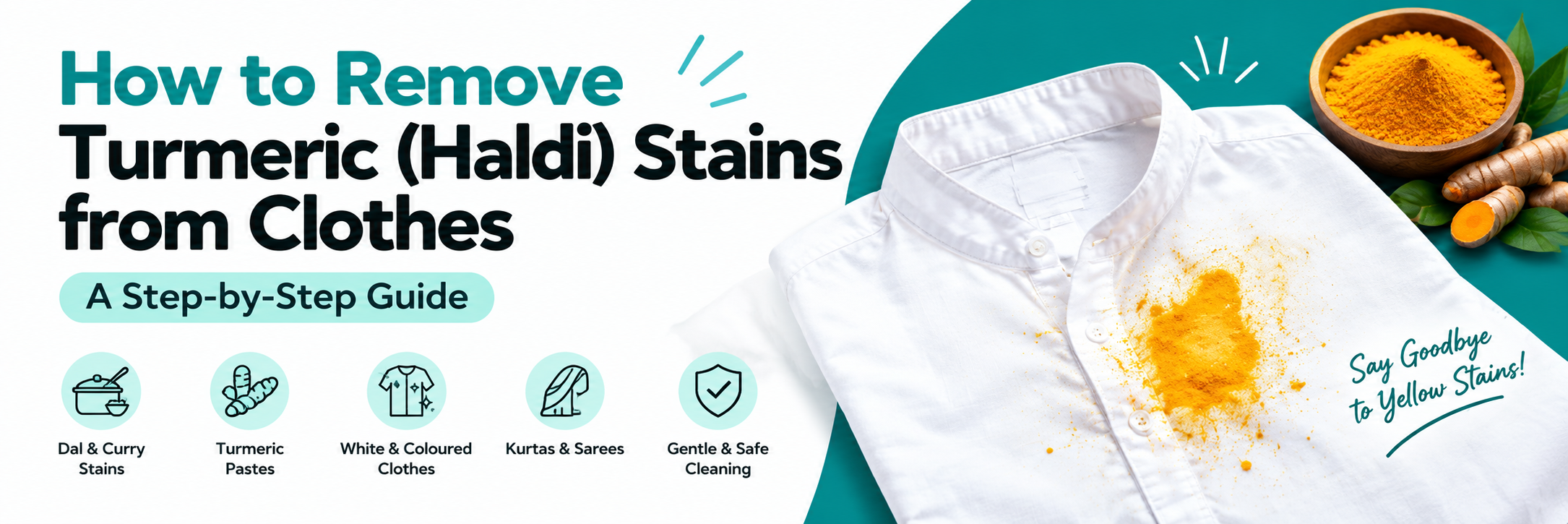
Turmeric, also known as haldi, is an essential ingredient in Indian cooking and many traditional celebrations. However, a small splash of dal, curry or turmeric paste can leave a bright yellow mark on your favourite clothes. These stains can be particularly frustrating on white shirts, colourful kurtas, sarees and festive outfits.
Ordinary washing may not always remove the yellow pigment completely. The good news is that quick action and the right cleaning method can help reduce turmeric stains. This guide explains how to treat fresh and dried haldi stains while protecting your clothes from unnecessary damage.
Before treating any garment, it is worth understanding its fabric-care instructions. Our guide to laundry care symbols and what they mean can help you choose a suitable cleaning method.
Why Are Turmeric Stains So Difficult to Remove?
Turmeric contains a natural yellow pigment called curcumin. This pigment does not dissolve easily in water, which is one reason why simply rinsing a stained garment may not be enough.
Turmeric stains can come from several sources:
- Dal and curry spills
- Turmeric powder used during cooking
- Haldi paste during wedding ceremonies
- Turmeric-based face packs
- Yellow spice mixtures and gravies
When turmeric combines with cooking oil or gravy, the stain can become even more challenging because both the yellow pigment and oily residue need to be treated. If a stain contains an oily component, our guide on how to remove oil and grease stains from clothes at home offers additional fabric-care advice.
How to Remove Fresh Haldi Stains from Clothes
Step 1: Remove Excess Turmeric
If turmeric powder, paste or food has landed on your clothes, gently lift away the excess using a spoon or the edge of a clean card. Avoid rubbing the stain with your fingers or a cloth. Rubbing may spread the yellow pigment over a larger area.
Step 2: Rinse with Cool Water
For washable garments, turn the clothing inside out and rinse the back of the stained area with cool running water. This can help push some of the loose residue out of the fabric instead of further into the fibres. Avoid using hot water at this stage, particularly when the stain contains other food ingredients.
Step 3: Apply a Suitable Laundry Detergent
Apply a small amount of suitable liquid laundry detergent to the affected area, following the product instructions. Gently work it into the stain without scrubbing aggressively. Allow it to work for the recommended time before rinsing or washing.
Test the product on an inconspicuous area first, especially when treating coloured garments. Using the right amount of detergent also matters. Read our guide on how much detergent you should actually use in a washing machine to avoid unnecessary residue and detergent waste.
Step 4: Wash According to the Care Label
Wash the garment according to its care label and the detergent instructions. Do not assume that every fabric can tolerate the same water temperature or washing cycle.
Step 5: Inspect Before Drying
Check the stained area while the garment is still damp. If a yellow mark remains, repeat the appropriate treatment before drying. Avoid ironing or using a hot dryer while the stain is still visible.
How to Remove Dried Turmeric Stains
Dried haldi stains may require more patience because the pigment has had more time to settle into the fabric. For washable garments, follow these steps:
- Gently remove any dry residue without rubbing it into the fabric.
- Pre-treat the stained area with a suitable laundry product.
- Allow the product to work according to its instructions.
- Wash the garment using the recommended cycle.
- Check the result before applying heat.
You may need to repeat the treatment if the yellow mark remains. If the garment has already been ironed or tumble-dried with the stain present, removal may be more difficult. Consider professional cleaning if the fabric is delicate or valuable.
For other stubborn marks, you can also read our guide on how to remove ink stains from clothes for more advice on treating stains without damaging the fabric.
How to Remove Haldi Stains from White Clothes
Yellow turmeric marks can be especially noticeable on white shirts, T-shirts, uniforms and cotton garments. Begin with gentle pre-treatment and a suitable detergent. If the stain remains, a fabric-compatible oxygen-based stain remover may help when used exactly as directed on its label.
Before using any bleaching product, check the garment's care label and test the product on a hidden area. Never mix different cleaning chemicals, and do not assume that chlorine bleach is suitable for every white garment.
For more tips on keeping white garments fresh, read our guide on how to wash white clothes without yellowing.
How to Treat Haldi Stains on Coloured Clothes
Coloured clothes require extra care because aggressive stain treatments may cause fading or uneven patches. Use a detergent or stain remover labelled as suitable for coloured fabrics. Test it on a hidden area before treating the visible stain.
Avoid applying bleach, lemon juice or other strong home remedies without checking their compatibility with the fabric and dye. For garments with unstable dyes, embroidery or decorative finishes, professional cleaning may be the safer option.
If colour transfer is also a concern, our guide on how to remove colour bleeding from clothes explains what to do when dye transfers between garments and which treatments to approach carefully.
Removing Haldi Stains from Kurtas and Sarees
Indian festive clothing often includes delicate materials, embroidery, zari, sequins or special dyes. A cotton kurta may tolerate a gentle home treatment, while a silk saree or heavily embroidered outfit may require specialised cleaning.
Before attempting stain removal:
- Check the garment's care label.
- Do not scrub embroidered or decorated areas.
- Avoid soaking garments that require professional cleaning.
- Do not apply household bleach directly to delicate fabrics.
- Seek professional advice if the fabric or dye may be damaged by water.
Taking the correct approach is especially important for wedding outfits and expensive festive clothing.
Can Sunlight Help Fade Turmeric Stains?
Sunlight can help fade some of the remaining yellow pigment because curcumin is sensitive to light. However, sunlight is not a guaranteed stain-removal solution.
First remove as much of the food residue as possible and wash the garment appropriately. For suitable washable fabrics, air-drying in sunlight may help reduce a faint remaining mark. Avoid prolonged exposure if the garment's colour or fabric is sensitive to sunlight.
Common Mistakes to Avoid
Rubbing the Stain Immediately
Rubbing can spread the turmeric over a larger area and make treatment more difficult.
Using Hot Water Without Checking the Fabric
High temperatures may make some food stains harder to remove. Begin with a cool-water rinse and follow the care label.
Applying Bleach Directly
Bleach may discolour fabrics, damage fibres or cause unwanted colour changes. Only use a suitable product when the garment and product instructions allow it.
Ironing a Stained Garment
Heat can make remaining stains more difficult to treat. Always inspect the garment before ironing or tumble-drying.
Ignoring Fabric-Specific Instructions
A method suitable for everyday cotton may not be appropriate for silk, wool or embellished clothing.
When Should You Choose Professional Laundry Care?
Professional cleaning may be a better option when:
- The turmeric stain is old or particularly stubborn.
- The garment is made from silk, wool or another delicate fabric.
- The outfit contains embroidery, zari or decorative details.
- The stain remains after careful home treatment.
- The garment has already been exposed to heat.
- You are unsure whether a cleaning product is safe for the fabric.
A professional cleaner can assess the garment and select an appropriate treatment based on the fabric, dye and type of stain.
How LaunderGo Can Help
Some fresh haldi stains can be treated at home, but delicate garments and stubborn yellow marks may need more specialised care.
LaunderGo helps customers access laundry and cleaning services according to their location and service availability. Professional laundry care can be useful when you want to protect your everyday clothes or valuable festive outfits from unsuitable cleaning methods.
If you are unsure how to treat a difficult stain, consider seeking professional advice before trying multiple cleaning products at home.
Final Thoughts
Turmeric stains are common in Indian households, but they do not always mean that your clothes are ruined. The most important steps are to remove excess residue gently, rinse appropriately, use a suitable cleaning product and check the garment before applying heat.
For delicate sarees, embroidered kurtas and stubborn dried stains, professional cleaning can help reduce the risk of fabric damage. With the right approach, you can give your clothes a better chance of looking clean and fresh again.
Frequently Asked Questions
Related articles

How to Remove Oil and Grease Stains from Clothes: A Complete Guide
Oil and grease stains can quickly make clothes look dirty and difficult to clean. Learn how to remove fresh and old oil stains from clothes, which cleaning methods work best, common mistakes to avoid, and when professional laundry care is a better option.
Oct 8, 2026
How Many Laundry Orders Can Your Shop Actually Handle? A Simple Capacity Planning Guide
Getting more laundry orders sounds great until your machines, staff and delivery timelines cannot keep up. Learn how to calculate your laundry shop's real capacity and scale orders without compromising quality.
Oct 6, 2026
How to Remove Ink Stains from Clothes: What Works and What to Avoid
Ink stains can ruin a perfectly good shirt, trouser or school uniform in seconds. Learn how to remove ink stains from clothes, what works for different types of ink, which home remedies to avoid and when professional stain removal is safer.
Oct 5, 2026
How to Remove Colour Bleeding from Clothes: What Actually Works and What to Avoid
Did a red, black or blue garment stain your clothes in the wash? Learn how to remove colour bleeding, what to do immediately, which home remedies to avoid and when professional laundry care is safer.
Oct 4, 2026