

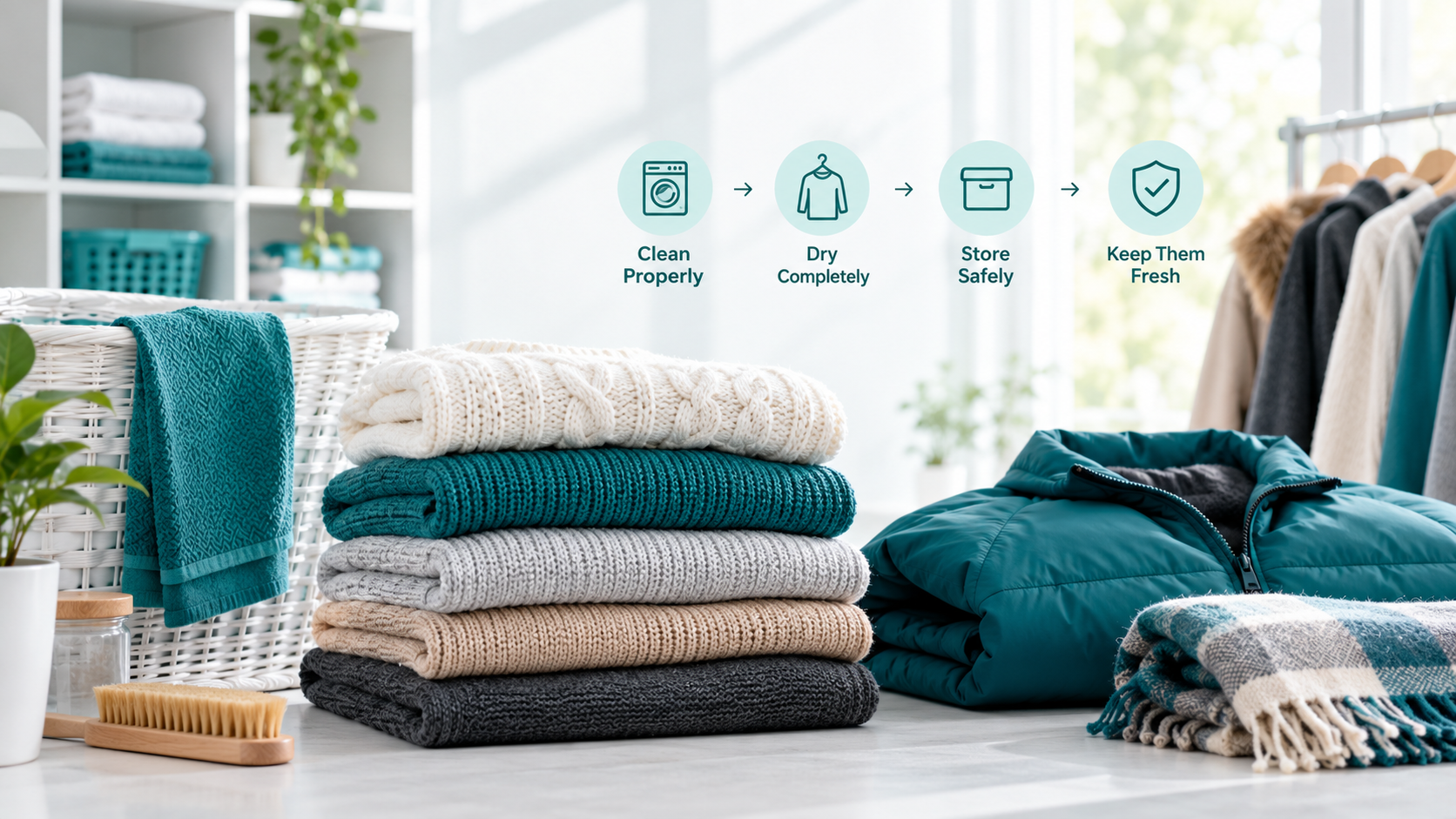
Introduction: Why Winter Clothes Need Special Care
As the weather changes, many households in India bring out sweaters, jackets, woollen shawls, blankets and other winter essentials. Clothes that have been stored for months may smell musty, collect dust or need cleaning before they are ready to wear.
Simply folding winter clothes and placing them back in a cupboard can cause problems if the garments are damp, dirty or stored in an unsuitable environment. Sweat, body oils, food stains and moisture may affect fabric freshness, while improper washing can cause shrinkage, stretching or damage to delicate fibres.
The good news is that caring for winter clothing does not have to be complicated. With the right washing method, proper drying and careful storage, you can help your sweaters, jackets, shawls and blankets stay fresh for longer.
In this guide, LaunderGo explains how to wash and store winter clothes, which garments need special attention, common mistakes to avoid and when professional laundry or dry-cleaning services may be a suitable option.
Why Should You Clean Winter Clothes Before Storing Them?
Even clothes that look clean can contain sweat, skin oils, dust and small food stains. Over time, these residues can contribute to unpleasant smells and attract pests that may damage certain fabrics.
Cleaning winter clothes before storing them helps remove everyday dirt and gives garments a better start when you take them out again.
Proper care can help you:
- Reduce unpleasant odours during storage.
- Remove visible stains before they become harder to treat.
- Protect delicate fibres from unnecessary wear.
- Keep garments ready for the next winter season.
- Reduce the risk of moisture-related problems by storing clothes completely dry.
- Extend the useful life of clothing through appropriate care.
Always check the garment's care label first. Different materials require different cleaning methods, and not every winter garment is suitable for machine washing.
How to Wash Winter Clothes: 10 Practical Tips
1. Check the Care Label Before Washing
The first step in cleaning any winter garment is checking its care label. The label provides instructions about washing temperature, hand washing, drying, ironing and professional cleaning.
Some sweaters can be hand-washed, while others require a delicate machine cycle or professional dry cleaning. Jackets may contain padding, special coatings or structured components that need specific care.
Look for symbols indicating whether a garment can be machine-washed, hand-washed, tumble-dried or professionally cleaned.
If you are unsure what the symbols mean, read our guide to laundry care symbols and what washing, drying and ironing instructions mean.
2. Separate Woollens from Regular Clothes
Winter wardrobes often contain a mixture of woollen sweaters, cotton sweatshirts, synthetic jackets, scarves and delicate shawls. Washing all these items together can increase the risk of stretching, colour transfer and fabric damage.
Separate garments by fabric type, colour and washing requirements. Keep delicate woollens away from heavy items such as jeans, towels and garments with zippers that could cause friction.
Dark and brightly coloured clothes should also be separated from light-coloured garments when there is a risk of colour bleeding.
For more guidance, see our article on colour bleeding in clothes and how to prevent it.
3. Wash Sweaters Gently
Sweaters made from wool, cashmere or other delicate fibres can lose their shape when washed aggressively. Hot water, strong agitation and rough wringing may cause shrinkage, stretching or surface damage.
For garments labelled suitable for hand washing:
- Use cool or lukewarm water according to the care label.
- Choose a mild detergent suitable for the fabric.
- Gently move the garment through the water without scrubbing aggressively.
- Rinse carefully if the detergent instructions require it.
- Press out excess water without twisting or wringing the fabric.
Lay the sweater flat on a clean, dry towel and reshape it while damp. Avoid hanging heavy, wet knitwear because its weight can stretch the fibres.
If the care label specifies dry cleaning, follow that instruction rather than experimenting with home washing.
4. Clean Jackets According to Their Material
Not all jackets can be cleaned in the same way. A cotton sweatshirt jacket, a padded winter coat, a leather jacket and a down-filled jacket may have very different care requirements.
Before cleaning a jacket, check its label and inspect any special instructions for the outer fabric, lining, padding and fastenings.
For machine-washable jackets, use the recommended cycle and detergent. Close zippers and fasteners when the care instructions permit it, and avoid overloading the machine.
Leather, suede and structured coats may require specialist cleaning. Do not soak them or apply ordinary detergent unless the manufacturer specifically recommends that method.
5. Remove Stains Before They Set
Food spills, makeup, oil and sweat marks can remain on winter clothing even when they are not immediately noticeable. Treating stains before storage can make future cleaning easier.
Start by identifying the stain and checking the fabric's care instructions. Blot fresh spills gently rather than rubbing them deeper into the fibres.
Test any stain-treatment product on a hidden area first. Avoid combining cleaning chemicals or using bleach on delicate or coloured garments unless the care label explicitly allows it.
For specific stain-removal advice, explore these LaunderGo guides:
- How to remove oil and grease stains from clothes.
- How to remove sweat stains and odour from clothing.
- How to remove makeup stains from clothes.
6. Use the Right Amount of Detergent
Using more detergent does not necessarily make winter clothes cleaner. Excess detergent can leave residue in fabric, while too little may not clean heavily soiled garments effectively.
Follow the detergent packaging instructions and adjust the quantity according to the load size, soil level and water conditions. Use a detergent appropriate for delicate woollens when required.
For a detailed explanation, read our guide on how much detergent you should use in a washing machine.
7. Dry Winter Clothes Completely
Drying is one of the most important steps in winter clothing care. Storing garments while they are still damp can lead to musty smells and may encourage mould growth when conditions are suitable.
After washing, remove excess water according to the garment's care instructions. Dry clothes in a well-ventilated area and allow enough time for thicker fabrics, seams, pockets and linings to dry completely.
Lay delicate knitwear flat if recommended. Avoid direct high heat or prolonged exposure to strong sunlight when it could damage, fade or shrink the material.
During humid or rainy weather, improve indoor ventilation and leave enough space between garments so air can circulate.
For more ideas, read our guide on how to dry clothes indoors without developing bad smells.
8. Wash Blankets and Shawls Carefully
Blankets and shawls can collect dust, body oils and odours during regular use. However, their size, weight and materials mean that they should not automatically be washed with ordinary clothing.
Check whether the item is machine-washable and whether your washing machine can safely handle its weight when wet. An overloaded machine may clean poorly and place unnecessary strain on the appliance.
For delicate wool blankets, embroidered shawls or items with special finishes, professional cleaning may be the safer option.
Always make sure these items are completely dry before folding and storing them.
9. Store Winter Clothes in a Clean, Dry Place
Once your winter garments are clean and fully dry, choose a storage location that is cool, clean and protected from moisture. Clean the cupboard or storage container before placing clothes inside.
Use breathable garment bags or suitable storage containers according to the garment type. Delicate knitwear is often best folded rather than hung, while structured coats may need appropriate hangers to maintain their shape.
Avoid packing clothes too tightly. Leaving some room can reduce crushing and make it easier to retrieve garments without damaging them.
Check stored clothes periodically, particularly if the storage area is humid or prone to dampness.
10. Avoid Common Winter Clothing Care Mistakes
Even expensive winter garments can wear out prematurely if they are cleaned or stored incorrectly. Avoid these common mistakes:
- Washing every garment using the same cycle.
- Ignoring care labels and fabric-specific instructions.
- Using hot water on garments that require cool washing.
- Twisting or wringing delicate knitwear.
- Storing clothes before they are completely dry.
- Using excessive detergent or unsuitable stain removers.
- Overloading the washing machine with bulky items.
- Hanging heavy wet sweaters in a way that stretches them.
- Keeping winter clothing in damp cupboards or unclean containers.
- Assuming every jacket or coat is suitable for home washing.
Small changes to your laundry routine can help protect fabric quality and reduce avoidable damage.
Can You Wash All Winter Clothes at Home?
No. The appropriate cleaning method depends on the fabric, garment construction and care label.
Many cotton sweatshirts and some synthetic garments can be washed at home when the label permits it. Delicate woollens may need gentle hand washing, while structured coats, leather garments and certain embellished items may require specialist care.
| Winter garment | Care recommendation |
|---|---|
| Cotton sweatshirt | Machine wash if permitted by the care label. |
| Woollen sweater | Use the specified wool or hand-wash method; dry flat when recommended. |
| Cashmere garment | Follow the care label carefully; use specialist cleaning when required. |
| Padded jacket | Check the label for washing, drying and filling-specific instructions. |
| Leather or suede jacket | Use suitable specialist care unless the manufacturer specifies otherwise. |
| Wool blanket | Check washing and weight restrictions; consider professional cleaning if needed. |
| Embroidered shawl | Check embellishment and fabric requirements before cleaning. |
This table is a general guide, not a substitute for the manufacturer's instructions. When in doubt, seek advice from a qualified garment-care professional.
When Should You Choose Professional Laundry or Dry Cleaning?
Professional cleaning may be useful when garments are delicate, bulky, heavily stained or labelled for specialist care. It can also save time when several winter items need attention at once.
Consider professional help when:
- A garment's care label specifies dry cleaning.
- A jacket has a structured design or specialised filling.
- A blanket is too large or heavy for your washing machine.
- A delicate shawl has embroidery or embellishments.
- A stain remains after an appropriate home treatment.
- You are uncertain which cleaning method is safe for the fabric.
Before handing over an item, explain any visible stains, identify delicate areas and ask about the recommended cleaning method and expected turnaround time.
If you are looking for a convenient way to explore laundry and cleaning options, visit LaunderGo. You can also check the LaunderGo store locator to explore available service locations.
Service availability and cleaning options may vary by location and provider, so confirm the details before placing an order.
How to Prepare Winter Clothes for Long-Term Storage
Before putting away your winter wardrobe, follow this simple checklist:
- Check every garment for visible stains and dirt.
- Wash or professionally clean items according to their care labels.
- Allow garments to dry completely, including thick seams and linings.
- Inspect cupboards and containers for dust or moisture.
- Fold knitwear carefully and hang suitable structured garments.
- Use appropriate storage bags or containers.
- Keep stored clothing away from damp areas.
- Check the wardrobe periodically for moisture or unusual odours.
Taking these steps before storage can make it easier to prepare your winter wardrobe when temperatures drop again.
Frequently Asked Questions About Washing and Storing Winter Clothes
Winter clothing care depends on fabric type, washing instructions and storage conditions. Here are quick answers to common questions about keeping winter garments fresh.
Should you wash winter clothes before storing them?
Yes, generally. Cleaning garments according to their care labels removes sweat, body oils and visible dirt before storage. Make sure every item is completely dry before putting it away.
How do you wash woollen sweaters without shrinking them?
Check the care label and use the recommended hand-wash or wool cycle with an appropriate detergent. Avoid excessive heat, aggressive agitation and twisting. Reshape the garment and dry it as instructed.
How do you prevent winter clothes from smelling musty?
Store only clean, completely dry clothes in a clean, dry and well-ventilated space. Avoid damp cupboards and inspect stored garments periodically, especially during humid weather.
Can winter jackets be washed in a washing machine?
Some jackets are machine-washable, but others require specialist cleaning. Check the care label for instructions about the outer fabric, lining, padding and drying method before washing.
Is dry cleaning necessary for every woollen garment?
No. Some woollen garments can be hand-washed or cleaned using a suitable wool cycle, while others require dry cleaning. Follow the care label rather than assuming all wool needs the same treatment.
Conclusion
Properly washing and storing winter clothes helps keep your wardrobe fresh, protects delicate fabrics and reduces the risk of unpleasant odours or avoidable damage. Start by checking care labels, separating garments by fabric type, treating stains carefully and choosing the appropriate cleaning method.
Most importantly, never store winter clothes while they are damp. Clean, dry garments and suitable storage conditions can make a significant difference when you bring them out for the next season.
For delicate sweaters, bulky blankets, structured jackets or garments that require specialist care, consider a professional laundry or dry-cleaning service. Visit LaunderGo to explore available laundry options and check service availability in your area.
Frequently Asked Questions
Related articles

How Digital Platforms Help Laundry Businesses Get More Customers and Grow
Discover how digital platforms can help laundry businesses attract customers, manage orders, improve operational efficiency and build a stronger local presence. Learn how laundry shop owners and dry cleaners can use technology to simplify daily operations, reduce manual work and explore new growth opportunities with platforms such as LaunderGo.
Oct 17, 2026
Laundry Quality Control Checklist: 7 Things to Check Before Returning Clothes to Customers
A clean garment should also be checked before it reaches the customer. Discover 7 practical quality control checks for laundry businesses, from stain inspection and garment counting to finishing, packaging and final order verification. This checklist can help laundry teams reduce avoidable mistakes and deliver a more consistent customer experience.
Oct 14, 2026
Laundry Services for Students and Professionals in Noida Sector 62 & 63: What to Look For
Living in a PG, hostel or rented flat in Noida Sector 62 or 63? Finding a laundry service that fits your schedule, budget and clothing needs can make everyday life easier. Discover what to check before choosing a local laundry provider, from cleaning quality and pricing to pickup, delivery and garment care.
Oct 11, 2026
How Many Laundry Orders Can Your Shop Actually Handle? A Simple Capacity Planning Guide
Getting more laundry orders sounds great until your machines, staff and delivery timelines cannot keep up. Learn how to calculate your laundry shop's real capacity and scale orders without compromising quality.
Oct 6, 2026